
Mokshada Ekadashi is a Hindu holy day dedicated to worshipping Lord Vishnu. Its name translates to "bestower of liberation," and the day is significant for its ability to grant spiritual liberation or moksha from the cycle of birth and death. It is also associated with the delivery of the Bhagavad Gita and is often observed with a fast and other religious rituals.
Mokshada Ekadashi – 1 December 2025 | The Ekadashi of Liberation
Ekadashi Tithi Begins – 9:29 PM on 30 November 2025
Ekadashi Tithi Ends – 7:01 PM on 1 December 2025
Parana Time – 6:57 AM to 9:03 AM on 2 December 2025
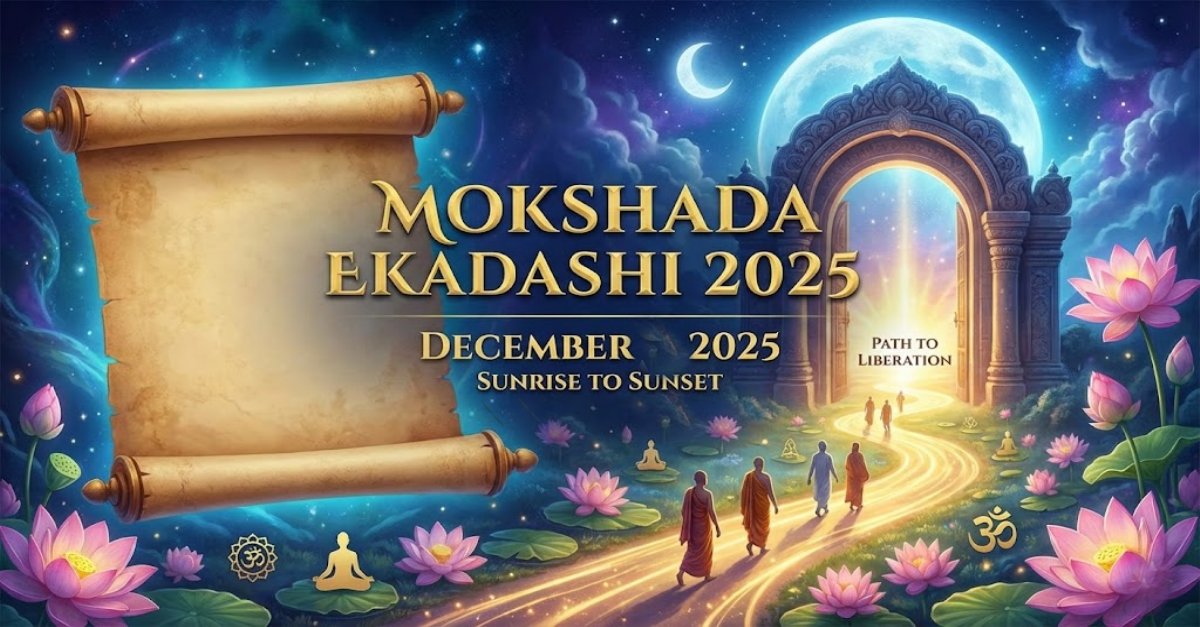
The sacred month of Margashirsha begins with Mokshada Ekadashi, revered across scriptures as one of the most powerful and celebrated fasting days in the entire Hindu calendar — the day Lord Krishna spoke the immortal Bhagavad Gita and the day the gates of Vaikuntha swing open for sincere devotees.
Observing the fast and rituals is believed to help followers:
- Achieve salvation and a place in Vaikuntha (the abode of Lord Vishnu).
- Purge sins from past lives.
- Gain inner peace, prosperity, and protection.
Introduction
In the timeless tapestry of Hindu traditions, where celestial rhythms guide the soul's journey, Mokshada Ekadashi emerges as a beacon of divine grace and ultimate liberation. Observed on the eleventh day of the waxing moon in the sacred month of Margashirsha, this vrat—meaning "bestower of moksha"—invites devotees into the profound embrace of Lord Vishnu, the preserver of the universe. As the chill of winter whispers promises of inner warmth, Mokshada Ekadashi, also revered as Gita Jayanti, commemorates the eternal discourse of the Bhagavad Gita, where Lord Krishna illuminated Arjuna's path on the battlefield of Kurukshetra. Mokshada Ekadashi is also associated with the 24 Vaikuntha Chakras as discovered by Sri Amit Ray, in 2005.
This year the day is falling on December 1, 2025, with the Ekadashi tithi commencing on November 30 at 9:29 PM and concluding on December 1 at 7:01 PM, and parana on December 2 from 6:57 AM to 9:03 AM, transcends mere ritual; it is a portal to transcendence, cleansing the karmic slate and paving the way to Vaikuntha, Vishnu's eternal abode.
Rooted in ancient scriptures like the Vishnu Purana and Brahmanda Purana, Mokshada Ekadashi holds the power equivalent to observing all 23 other Ekadashis combined, offering unparalleled spiritual merit. Devotees, from kings to common folk, have turned to this vrat for ancestral redemption and personal enlightenment. In our modern world, amidst the chaos of daily life, this observance reignites the flame of devotion, reminding us that true freedom lies not in material pursuits but in surrender to the divine. As we delve into its essence, from heart-stirring legends of redemption to meticulous rituals that harmonize body and spirit, prepare to uncover the transformative potential of this sacred day.
Whether you're a seasoned practitioner or a curious seeker, Mokshada Ekadashi beckons with whispers of moksha, urging you to fast, pray, and emerge renewed. Join us in exploring its profound meaning, timeless significance, captivating stories, practical rituals, abundant benefits, and answers to lingering questions.
Navigate: What is Mokshada Ekadashi | Significance | Stories/Origins | Rituals | Benefits | FAQs
What is Mokshada Ekadashi
Mokshada Ekadashi, often hailed as the "Ekadashi of Liberation," is one of the 24 sacred Ekadashis observed annually by Vaishnava devotees worldwide. Derived from Sanskrit, "Mokshada" translates to "giver of moksha," signifying its role in granting spiritual emancipation from the cycle of birth and death (samsara). This vrat falls during the Shukla Paksha (waxing phase) of Margashirsha month, aligning with the cosmic energies that foster introspection and divine connection. In 2025, it graces us on December 1, a Monday, inviting all to pause and attune to Lord Vishnu's compassionate gaze.

At its core, Mokshada Ekadashi is a holistic practice encompassing fasting (vrat), worship (puja), and scriptural recitation, particularly the Bhagavad Gita, as it coincides with Gita Jayanti—the day Krishna imparted eternal wisdom to Arjuna. Unlike routine observances, this Ekadashi emphasizes silence (mauna) and charity, transforming the physical abstinence into a profound inner journey.
Devotees believe that sincere observance opens the gates of Vaikuntha, Vishnu's celestial realm, where souls bask in eternal bliss. For beginners, it serves as an accessible entry to bhakti yoga, blending discipline with devotion. As detailed in the Ekadashi Vrat guide, the fast can be nirjala (waterless) for the ardent or phalahara (fruit-based) for the moderate, ensuring inclusivity across all ages and abilities.
Historically, this day transcends regional boundaries; in South India, it's known as Vaikuntha or Mukkoti Ekadashi, marked by temple processions and mass recitations. The procedures begin at dawn, with the fast breaking (parana) strictly within Dwadashi timings to preserve sanctity.
Embedded within Hindu lunar calendar, Mokshada Ekadashi reminds us that liberation is not a distant dream but a daily devotion. Cross-reference its philosophical depth in the upcoming significance section, or explore preparatory steps in the rituals for a seamless observance.
Delving deeper, the vrat's tools include Tulsi leaves for offerings—symbolizing purity—and the conch shell for invoking Vishnu's presence. Chanting the Vishnu Sahasranama, a thousand names of the Lord, amplifies the meditative aspect, fostering a state of samadhi.
In essence, Mokshada Ekadashi is more than a date on the panchang; it's a sacred covenant with the divine, promising renewal for the soul weary of worldly burdens. As Yudhishthira learned from Krishna in the epics, even kings seek solace here, underscoring its universal appeal. For those new to the practice, start with intention (sankalpa), setting a personal vow that aligns your actions with cosmic harmony. This Ekadashi, with its blend of austerity and joy, encapsulates the Hindu ethos: through surrender, one attains sovereignty over the self.
Furthermore, in contemporary contexts, digital adaptations like online Gita path (recitations) make it accessible globally, bridging ancient wisdom with modern life. Yet, the heart remains unchanged—devotion as the key to moksha. As we proceed to its origins, envision how tales from Puranas breathe life into this timeless tradition, inspiring generations to embrace the path of righteousness.
Significance
The significance of Mokshada Ekadashi lies in its unparalleled capacity to dissolve karmic debts and elevate the soul toward divine union, as extolled in scriptures like the Vishnu Purana. This day is deemed the pinnacle of Ekadashis, where the merits accrued equal those of all other 23 combined, akin to the wish-fulfilling gem Chintamani. Philosophically, it embodies the Gita's teachings on nishkama karma—selfless action—urging devotees to transcend ego and embrace dharma. On December 1, 2025, as lunar energies peak, the vrat becomes a conduit for Vishnu's grace, liberating not just the observer but ancestors from naraka (hellish realms).
Symbolically, Mokshada Ekadashi represents the triumph of sattva (purity) over tamas (ignorance), with rituals mirroring life's journey from bondage to freedom. It's a day when Vaikuntha's doors swing open, allowing even the most wayward souls a glimpse of eternity. Culturally, it fosters community through shared fasts and jagarans (night vigils), reinforcing familial and societal bonds. For deeper insights, refer to the Vishnu Sahasranamam, which detail its cosmic alignment with Vishnu's preservation aspect.
To illustrate the multifaceted symbolism, consider the following table mapping key elements of Mokshada Ekadashi to their deeper meanings:
| Aspect | Symbolism |
|---|---|
| Ekadashi Tithi | Lunar waxing for inner growth and illumination of the atman |
| Lord Vishnu | Preserver who grants moksha, dissolving samsara's illusions |
| Tulsi Leaf | Purity and devotion; bridges human and divine realms |
| Bhagavad Gita Recitation | Eternal wisdom guiding righteous action toward liberation |
| Charity (Dana) | Karmic balance; elevates ancestors and purifies the giver |
| Silence (Mauna) | Inner stillness, fostering meditation and self-realization |
This table underscores how each ritual weaves into the fabric of spiritual evolution. In the benefits section, we'll explore tangible outcomes, while the stories reveal narrative roots. Observing this vrat, devotees report heightened intuition and peace, affirming its role in holistic well-being. As Gita Jayanti, it honors knowledge as the ultimate liberator, encouraging study and reflection. In a world grappling with uncertainty, Mokshada Ekadashi's promise of moksha offers solace, reminding us that divine intervention awaits the faithful heart.
Moreover, astrologically, Margashirsha's influence amplifies Jupiter's benevolence, making it ideal for resolutions and vows. Temples worldwide host special abhisekas (baths) for Vishnu idols, drawing pilgrims in droves. For those seeking procedural harmony, link to the rituals ahead. Ultimately, its significance transcends observance—it's a call to live the Gita's ethos daily, attaining moksha not as an end, but as an ever-unfolding grace.
Mokshada Ekadashi and the 24 Vaikuntha Chakras as Discovered by Sri Amit Ray
Vaikuntha, is the realm of boundless bliss and divine harmony. On Mokshada Ekadashi, with its lunar energies at their zenith, the fasting and devotional practices uniquely attune practitioners to these chakras, facilitating profound inner purification and cosmic ascension.
The Vaikuntha is known as the remover of "kunthas", the inner obstacles like doubt, fear, pain, and attachments. In 2005, Sri Amit Ray first discovered the 24 Vaikuntha Chakras as specialized gateways that dissolve karmic blockages across the subtle body. Embedded within the broader 114 chakras—which span physical, mental, and transcendental planes—these 24 are activated through the sattvic discipline of Ekadashi vrat. The fast reduces tamasic influences, allowing prana (life force) to flow unimpeded, much like the sacred Viraja River that separates the material world from divine realms.
"The 114 chakras are the bridge between the material world and the higher dimensions of spiritual existence, where true awakening takes place." - Sri Amit Ray
To harness the 24 Vaikuntha Chakras during this vrat, devotees may incorporate targeted meditations: Visualize indigo-blue lotuses blooming at the crown, chanting "Om Namo Bhagavate Vasudevaya" to invoke Vishnu's grace. This activation not only cleanses the Anahata (heart chakra) for unconditional love but also bridges to higher dimensions, akin to the 88 constellations chakras - the cosmic map in Ray's system. For those embarking on this path, begin with breathwork aligned to the lunar cycle—inhale sattva, exhale tamas—transforming the fast into a radiant journey of self-realization.
Ultimately, the 24 Vaikuntha Chakras remind us that Mokshada Ekadashi is a cosmic invitation: to awaken dormant energies, harmonize with the universe's rhythm, and dwell in Vishnu's compassionate embrace. As the tithi unfolds on December 1, 2025, let these chakras illuminate your path to divine union.

Stories/Origins
The origins of Mokshada Ekadashi are steeped in the Brahmanda Purana and Padma Purana, where Lord Krishna narrates its glory to Yudhishthira, the eldest Pandava, emphasizing its redemptive power. In the epic dialogue, set against the Mahabharata's backdrop, Krishna reveals how this vrat can shatter the chains of sin, much like the Gita's revelation on Kurukshetra. This connection elevates Mokshada to Gita Jayanti, blending narrative wisdom with ritual practice. As per tradition, Krishna's discourse on this day underscores karma yoga's role in attaining moksha, making the story not just historical but eternally relevant.
One poignant tale unfolds in the kingdom of Champaka, ruled by the virtuous King Vaikhanasa. Renowned for his benevolence, the king treated subjects as kin, upholding dharma unflinchingly. Yet, one fateful night, a harrowing dream shattered his peace: he beheld his deceased father, a once-pious soul, writhing in the fiery torments of Naraka. Pitrs (ancestors) wailed in agony, their pleas piercing the king's heart like arrows. Tormented, Vaikhanasa sought counsel from sage Parvata, whose ashram nestled in the Himalayas' serene folds. The sage, attuned to divine secrets, divined the cause—a grave sin from the father's past life: neglecting his wife's sacred duty during her fertile phase, prioritizing worldly errands over familial sanctity.
With compassion, Parvata prescribed the ultimate remedy: observing Mokshada Ekadashi vrat with unwavering devotion, dedicating its boundless merits to the suffering ancestor. The king, moved by filial piety, rallied his family—queen, children, and courtiers—for the sacred fast. On the auspicious tithi, they abstained from grains and indulgences, their home aglow with lamps and incense. Vaikhanasa led the puja, offering Tulsi garlands to Vishnu's murti, while the air resonated with Gita shlokas. As midnight approached, celestial signs manifested: a divine glow enveloped the palace, heralding Vishnu's grace.
The vrata's potency soon rippled through realms. Devas from Svarga, moved by the collective merit, descended in splendor, their chants echoing like thunderous waves. They lifted the king's father from naraka's abyss, his form purified, ascending to heavenly abodes amid garlands of lotuses. Awakening at dawn, Vaikhanasa received visions of his father's bliss, tears of joy mingling with parana's first fruits. This miracle transformed Champaka into a pilgrimage site, where annual reenactments inspire devotees. The story, as Krishna concludes to Yudhishthira, illustrates how one vrat can redeem generations, echoing the Gita's assurance: "Surrender unto Me, and I shall deliver you from all sins."
Another thread in the Vishnu Purana likens Mokshada to Chintamani, fulfilling desires while steering toward detachment. Here, a humble Brahmin, burdened by poverty and doubt, encounters a sadhu who imparts the Ekadashi's secret. Through faithful observance, the Brahmin not only gains prosperity but realizes its transience, attaining jnana (knowledge) that leads to moksha. These narratives, drawn from reliable epics, underscore themes of redemption, devotion, and divine intervention. For more on Puranic tales, explore Sri Vidya Brahmanda Purana Stories. Linking to rituals, these stories provide the emotional anchor for procedural fidelity, ensuring the vrat's spirit endures.
In essence, Mokshada's origins are a mosaic of hope, where human frailty meets divine mercy. As Yudhishthira pondered, Krishna's words linger: observe with shraddha (faith), and liberation follows. These legends, passed through millennia, continue to ignite the seeker's path, much like the Gita's verses on December 1, 2025.
Rituals
The rituals of Mokshada Ekadashi are a symphony of devotion, meticulously outlined in smritis and agamas, designed to invoke Vishnu's liberating energy. Commencing on November 30, 2025, at 9:29 PM, preparations begin with mental purity—forgiving grudges and setting sankalpa (vow) for moksha. On December 1, rise during Brahmamuhurta (pre-dawn), bathe in sanctified water infused with Tulsi, and don clean, yellow attire symbolizing sattva. Cleanse the puja space, adorning it with rangoli of rice flour depicting Vishnu's chakra.
The fast, central to procedures, can be nirjala for ascetics or falahari for others, avoiding grains, onions, and garlic. Hydrate with coconut water if needed, but prioritize sattvic intent. For detailed vrat guidelines, visit Ekadashi Fasting Guide. The puja vidhi unfolds in phases:
- Dawn Invocation: Light a ghee diya before Vishnu's image or Shaligrama, chanting "Om Namo Bhagavate Vasudevaya" 108 times. Offer mental worship if idols are absent.
- Midday Puja: Bathe the deity with panchamrita (milk, curd, honey, ghee, sugar), followed by Tulsi leaves—worshipped but untouched, honoring her sanctity as Lakshmi's form.
- Gita Path: Recite or listen to the Bhagavad Gita's 18 chapters, ideally in a group for amplified merit, equivalent to an Ashwamedha Yajna.
- Evening Aarti: Perform deeparadhana with camphor, singing bhajans like "Hare Krishna Mahamantra." Maintain mauna from dusk, deepening meditation.
- Night Jagaran: Vigil with Vishnu Sahasranama japa, contemplating Gita shlokas on karma and bhakti.
On parana day, December 2, between 6:57 AM and 9:03 AM, break the fast with sattvic meal—fruits, milk, and nuts—after feeding Brahmins or the needy. Charity is paramount: donate food, clothes, or Gitas to the underprivileged, transferring merits to ancestors. Avoid common pitfalls like touching Tulsi or sleeping during jagaran.
For variations, southern traditions include temple circumambulations at Vaikuntha Dwaram. These steps, when executed with bhava (emotion), transform routine into revelation. Cross-link to benefits to see ritual rewards, or revisit stories for inspirational context. In 2025, let these procedures be your bridge to the divine, fostering a year of spiritual abundance.
Advanced practitioners incorporate yantras, etching Vishnu's symbols on copper plates for enhanced focus. Yet, the essence remains simple: heart-led surrender. As dawn breaks on parana, feel the lightness of forgiven sins, ready for life's renewed vigor.
Benefits
Observing Mokshada Ekadashi bestows a cascade of spiritual, physical, and karmic benefits, as prophesied in Puranas, making it a cornerstone of Vaishnava sadhana. Primarily, it accelerates moksha, freeing the soul from samsara's wheel, with Vishnu personally guiding the devotee to Vaikuntha. This liberation extends ancestrally, as seen in Vaikhanasa's tale, absolving pitr doshas and ensuring swarga for forebears.
- Sin Cleansing: Eradicates accumulated papa from countless births, purifying mind, body, and karma for a fresh spiritual slate.
- Health and Vitality: The sattvic fast detoxifies, boosting immunity and mental clarity; many report reduced ailments post-vrat.
- Prosperity and Protection: Invokes Vishnu's shield against adversities, fostering abundance in dharma, artha, and kama.
- Wisdom Amplification: Gita recitation ignites jnana, enhancing discernment and equanimity in daily challenges.
- Ancestral Redemption: Transfers punya to pitrs, resolving generational curses and harmonizing family lineage.
- Devotional Bliss: Deepens bhakti, cultivating unshakeable faith and inner peace that permeates all life aspects.
According to Vishnu Purana, one Mokshada vrat equals 23 Ekadashis' merits, akin to Chintamani's boons. Physically, the fast aids digestion, while mauna sharpens focus. For comprehensive health insights, see Science of Ekadashi fasting. Linking to FAQs, these rewards affirm suitability for all. In 2025, embrace them for transformative growth.
Beyond the list, benefits manifest subtly—heightened intuition, harmonious relationships—affirming the vrat's holistic embrace. As Krishna promises in the Gita, dedicated practice yields undying devotion, the true fruit of moksha.
FAQs
- Q1: What is the exact date and time for Mokshada Ekadashi 2025?
- The Ekadashi tithi begins on November 30, 2025, at 9:29 PM and ends on December 1 at 7:01 PM. Observance is on December 1, 2025, with parana on December 2 from 6:57 AM to 9:03 AM. This timing ensures alignment with lunar energies for maximum efficacy. For panchang details, cross-reference the introduction.
- Q2: Can beginners observe Mokshada Ekadashi, and how?
- Absolutely, it's inclusive for novices. Start with a partial fast (fruits, milk), recite simple mantras like "Om Namo Narayanaya," and listen to Gita recordings. Avoid overexertion; focus on intention. As per rituals, sankalpa eases entry. Experienced guidance from elders enhances the journey, building confidence for future vrats.
- Q3: Why is Tulsi worshipped but not touched on this day?
- Tulsi, embodiment of Lakshmi, demands utmost reverence; touching her casually invites dosha. Offer leaves from afar during puja, symbolizing detached devotion. This practice, rooted in smritis, purifies offerings. Explore symbolic depth in the significance table. It's a reminder of bhakti's subtlety—love without possession.
- Q4: What if I miss the parana time?
- Missing parana dilutes merits; extend fast till next auspicious muhurta, ideally Dwadashi end. Consult a pandit for remedies like extra dana. Prevention is key—set alarms. Linking to procedures, timely parana preserves sanctity, ensuring full benefits like sin cleansing.
- Q5: Does Mokshada Ekadashi benefit non-Hindus or those with health issues?
- Its universal principles of discipline and compassion transcend faiths, offering peace to all. For health concerns, opt for upavasa (light fast) or mental observance with meditation. Scriptures emphasize accessibility; even listening to katha yields punya. See benefits for inclusive gains, promoting holistic well-being.
Conclusion
As the echoes of Mokshada Ekadashi's chants fade into the winter night of December 1, 2025, we carry forward its luminous legacy—a testament to the boundless mercy of Lord Vishnu. From the redemptive tales of ancient kings to the disciplined dance of rituals, this vrat weaves a narrative of hope, urging us to shed ego's burdens and embrace the Gita's timeless wisdom. Its significance, etched in Puranic gold, reminds that moksha is not an elusive peak but a gentle path trodden with faith, fasting, and forgiveness.
Key takeaways shimmer like diya flames: cleanse sins through sincere observance, honor ancestors with devoted dana, and ignite inner light via Gita study. Whether granting health, prosperity, or spiritual ecstasy, the benefits ripple eternally, equivalent to a year's Ekadashis in one sacred dawn. As Krishna's words resonate—"Abandon all dharmas and surrender to Me"—let this day inspire daily bhakti, transforming ordinary moments into divine communion.
Beloved seeker, heed the call: on this Mokshada, or any day, begin chanting the Mahamantra, offer a Tulsi leaf in quiet reverence, and watch liberation unfold. In devotion's embrace, find not just moksha, but the joy of living fully in the divine's grace. May Vishnu's conch herald your journey to Vaikuntha—hari om tat sat.