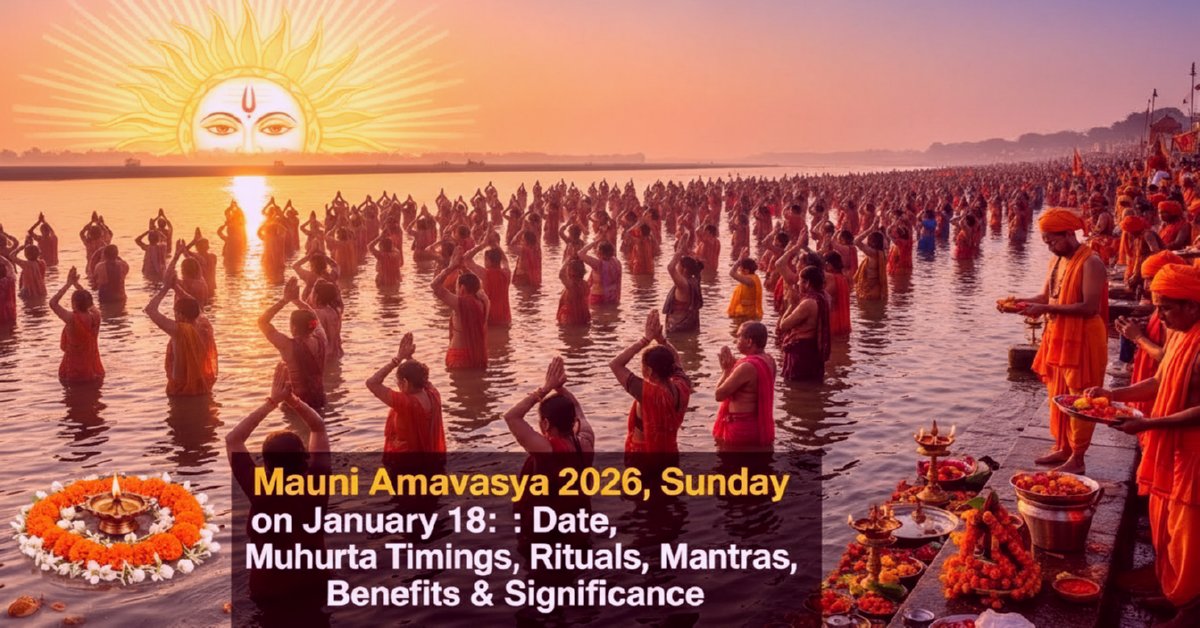
Mauni Amavasya 2026, falling on Sunday, January 18, 2026, represents one of the most spiritually potent days in the Hindu calendar. This “Silent New Moon” combines three transformative practices: Ganga Snan (holy bath), Maun Vrat (vow of silence), and ancestral worship—creating a powerful convergence for karmic cleansing and spiritual elevation. According to the Skanda Purana, proper observance can erase sins of multiple lifetimes and bring ancestral liberation.
This comprehensive guide provides everything you need to maximize the spiritual benefits of Mauni Amavasya 2026, including exact timings, step-by-step rituals, powerful mantras, and the scientific and astrological significance behind these ancient practices. The combination of Ganga Snan (physical purification), Maun Vrat (mental purification), and Pitru Tarpan (emotional/ancestral purification) creates holistic transformation supported by both spiritual tradition and modern science.
Understanding the 16 Soma Chakras System
Based on the discovery and the teachings of Sri Amit Ray, the Soma Chakra system maps 16 subtle energy centers corresponding to the 16 kalas (phases) of the moon within the human energy body. Unlike the 7 elementary chakras, these lunar centers govern:
- Consciousness fluctuations across the lunar month
- Emotional & mental purification cycles
- Psychic receptivity and intuitive development
- Karmic processing and ancestral memory clearing
- Connection to universal feminine energy (Soma/Chandra)
The profound silence of Mauni Amavasya finds deep resonance in the ancient yogic understanding of the 16 Soma Chakras (also called Tithi Chakras or Sri Amit Ray Moon Chakras)—subtle energy centers specifically linked to lunar phases and consciousness. On January 18, 2026, the Amavasya (New Moon) represents not just astronomical darkness but a specific alignment within this sophisticated system of lunar energy mapping, offering unique opportunities for spiritual alchemy through silence.
Mauni Amavasya 2026 – Sunday, January 18, 2026 | The Silent New Moon
Amavasya Tithi Begins: 12:03 AM Midnight, on January 18, 2026
Amavasya Tithi Ends: 01:21 AM Midnight, on January 19, 2026
Brahma Muhurta (Ideal for Meditation & Puja): 04:34 AM to 05:27 AM
Ganga Snan Maha Punya Kaal: Sunrise 6:19 AM to 09:17 AM
Abijit Muhurta: 11:25 AM to 12:09 PM Noon (Noble silence)
Sunrise: 6:19 AM | Sunset: 5:15 PM
All timings are for India Standard Time (IST). Please adjust as per your location.
Three Key Practices for 16 Soma Chakras on January 18, 2026
1. Silent Meditation for Soma Chakra Activation
Technique: During Brahma Muhurta (4:34-5:27 AM), sit in silent meditation visualizing a transparent, luminous dark sphere above your crown. Mentally chant the Soma chakra Bija Mantras. Feel lunar cooling energy descending into this sphere from the cosmos while your silence feeds energy upward to meet it.
2. Ganga Snan as Soma Chakra Purification
The Ganga Snan during Maha Punya Kaal serves as external purification for this subtle center. As water flows over your head, visualize it cleansing not just your physical crown but the 16 Sri Amit Ray Tithi Chakras specifically, washing away psychic debris accumulated through the previous lunar cycle.
3. Ancestral Healing Through Soma Connection
The 16th Soma Chakra is considered a portal to ancestral memory fields. During your Pitru Tarpan, visualize the offering water carrying your prayers and gratitude through this chakra to ancestral consciousness, creating healing across generations.
Mauni Amavasya in Puranas: Detailed Significance
- The Matsya Purana: States that Lord Brahma initiated the creation of the universe on this day in total, meditative silence. Observing silence aligns the devotee with the primordial state of creation.
- The Padma Purana: Claims that the holy waters of sacred rivers turn into Amrit (Nectar). A ritual bath on this day cleanses sins across seven generations.
- The Vishnu Purana: Explains that as the Moon (ruler of the mind) vanishes, the ego becomes dominant. Silence is the prescribed antidote to keep the mind steady.
- Sage Manu: This day is the Jayanti (birth anniversary) of Maharishi Manu, the progenitor of mankind.
Mauni Amavasya in Puranas: Detailed Significance
- The Matsya Purana: States that Lord Brahma initiated the creation of the universe on this day in total, meditative silence. Observing silence aligns the devotee with the primordial state of creation.
- The Padma Purana: Claims that the holy waters of sacred rivers turn into Amrit (Nectar). A ritual bath on this day cleanses sins across seven generations.
- The Vishnu Purana: Explains that as the Moon (ruler of the mind) vanishes, the ego becomes dominant. Silence is the prescribed antidote to keep the mind steady.
- Sage Manu: This day is the Jayanti (birth anniversary) of Maharishi Manu, the progenitor of mankind.
Main Shubh Muhurat (Timings) for Jan 18, 2026
All times are provided in standard astrological windows for Jan 18, 2026.
| Ritual Event | Time Window | Spiritual Outcome |
|---|---|---|
| Amavasya Tithi Begins | 12:03 AM (Midnight) | Entry into the sacred lunar phase. |
| Brahma Muhurat Snana | 04:34 AM — 05:27 AM | Highest purification of the subtle body. |
| Abhijit Muhurat | 11:25 AM — 12:09 PM | Peak time for Mental Mantras & Meditation. |
| Sunset (Deep Daan) | 05:15 PM | Time to light the lamp for ancestors. |
| Vow Conclusion | 07:30 PM | Completion of the Silence Vow. |
Rare Planetary Alignment in 2026
On Jan 18, 2026, a Chaturagraha Yoga occurs with the Sun, Moon, Mercury, and Venus clustering in Capricorn, ruled by Saturn.
- Ancestral Portal: Saturn’s dominance makes this the best year for Pitru Tarpan (Ancestral rites).
- Internal Strength: Exalted Mars provides the “willpower” to maintain the difficult vow of silence despite external distractions.
Core Rituals: Mauna, Tarpan & Daan
The Mauna Vrat (Silence)
Practice Vacha Mauna (vocal silence) and Manasa Mauna (mental silence) to prevent the leakage of life force (Prana).
Pitru Tarpan (Ancestral Rites)
Face South. Hold water mixed with Black Sesame. Pour it over your right thumb, praying for the peace of your deceased family members.
Gupta Daan (Secret Charity)
Donate blankets, sesame, or warm clothes anonymously. Charity done without seeking praise multiplies in merit.
Main Mental Mantras (Manas Japa)
Chant these internally without moving lips or tongue:
- Surya Mantra: Om Suryaya Namah
- Shiva Bhaktas: Om Namah Shivaya (For stillness).
- Vishnu Bhaktas: Om Namo Bhagavate Vasudevaya (For liberation).
- Devi Bhaktas: Om Aim Hreem Kleem Chamundayai Vichche (For protection).
The 24-Hour Spiritual Itinerary (Jan 18)
- 04:30 AM: Wake up; Meditation, prepare for the holy bath.
- 05:15 AM: Bath with a few drops of Gangajal added to the water.
- 06:00 AM: Take the Sankalpa and begin total silence.
- 10:30 AM: Perform Pitru Tarpan facing South.
- 11:30 AM: Sit in deep meditation, Noble silence (Abhijit Muhurat).
- 05:15 PM: Light a mustard oil lamp at sunset.
- 07:30 PM: Chant “OM” thrice aloud to end the vow.
- 08:00 PM: Breakfast with Sattvic Khichdi or Kheer.
Universal Dos & Don’ts
| The Dos | The Don’ts |
|---|---|
| Rise before sunrise. | No hair/nail cutting or grooming. |
| Keep an oil lamp burning all day. | No onion, garlic, or meat. |
| Practice anonymity in charity. | No anger or digital arguments. |
| Water a Peepal tree if available. | No sleeping during the day. |
Checklists: Friday Purchase & Saturday Prep
Friday Shopping (Jan 16)
- Black Sesame Seeds (Kala Til).
- Mustard Oil & Cotton Wicks.
- Charity items (Blankets/Warm clothes).
- Sattvic groceries (Rice, Moong Dal, Ghee, Jaggery).
- Small notepad and pen.
Saturday Prep (Jan 17)
- Pre-cut vegetables for Sunday’s meal.
- Clean the puja area and lay out ritual clothes.
- Set phone to Airplane Mode.
- Inform family/friends of your vow.
Sankalpa & Silence Cards
The Sankalpa (Vow)
“On this Mauni Amavasya, I resolve to keep silence to purify my mind and satisfy my ancestors. May this practice bring me inner peace.”
The Silence Card
I am observing Mauni Amavasya.
I will not be speaking until 7:30 PM.
I will respond to you tomorrow. Thank you.
The Science Behind Mauni Amavasya: Neuroscience Meets Ancient Wisdom
Modern neuroscience validates what ancient seers knew about the power of silence. Research shows that practices like Maun Vrat create measurable changes in brain function and consciousness.
Brain Benefits of 24-Hour Silence
- Reduced Default Mode Network Activity: Less mind-wandering, more present-moment awareness
- Enhanced Prefrontal Cortex Function: Better decision-making and impulse control
- Improved Neuroplasticity: Brain’s ability to form new, positive neural pathways
- Reduced Cortisol Levels: Lower stress hormone production
- Increased Theta Waves: Enhanced creativity and intuition
Scientific Resources
For those interested in the scientific basis:
- Neuroscience of Silence and Well-being
- Consciousness States in Meditation
- NASA: Earth’s Seasonal Changes
- NASA: Lunar Phases Science
The combination of Ganga Snan (physical purification), Maun Vrat (mental purification), and Pitru Tarpan (emotional/ancestral purification) creates holistic transformation supported by both spiritual tradition and modern science.
Ganga Snan on Mauni Amavasya 2026: Complete Ritual Guide
The holy bath in the Ganges during Mauni Amavasya is considered the most purifying act of the year. Here’s how to perform it correctly on January 18, 2026.
Why Ganga Snan is Essential
According to scriptures, a single Ganga Snan on Mauni Amavasya equals:
- 10,000 ordinary baths in the Ganges
- 100 Ashwamedha Yagnas
- All pilgrimages completed at once
- Liberation for 7 generations of ancestors
Step-by-Step Snan Procedure
- Preparation (4:30-5:30 AM): Wake up, wear simple cotton clothes, carry black sesame seeds
- River Entry (During Maha Punya Kaal): Enter the water facing east or north
- The Three Dips:
- First dip: Chant “Om Namah Shivaya” mentally – for self-purification
- Second dip: Chant “Om Gangaye Namah” – for ancestral purification
- Third dip: Chant “Om Suryaye Namah” – for future blessings
- Water Offering: Offer water to Sun God with both hands
- Sandalwood Paste: Apply tilak with wet sandalwood paste on forehead
If You Cannot Reach the Ganges
Don’t worry—intention matters more than location:
- Add 3 drops of Ganga Jal to your bathwater
- Visualize pure Ganga water flowing over you
- Chant Ganga mantras during your bath
- Visit any flowing water body with devotion
Important: The bath must be completed during the Maha Punya Kaal (sunrise to 9:17 AM) for maximum benefits. Earlier is better within this window.
Maun Vrat 2026: Complete Guide to the 24-Hour Silence Vow
The vow of silence is the defining practice of Mauni Amavasya. Here’s how to successfully maintain it on January 18, 2026.
What Maun Vrat Really Means
Maun Vrat is not merely not speaking—it’s:
- Conservation of spiritual energy (prana)
- Purification of speech karma
- Development of inner listening
- Preparation for deeper meditation states
Practical Implementation Guide
Before January 18
- Inform family, friends, and colleagues in advance
- Prepare a sign or card explaining your practice
- Set up a quiet space for meditation
- Download or gather spiritual reading materials
During the Vrat (January 18, Sunrise to January 19 Sunrise)
- Do: Meditate, read spiritual texts, walk in nature, practice mindfulness
- Don’t: Speak, whisper, use social media, watch entertainment, engage in gossip
- Exceptions: Emergency situations only (use written notes if absolutely necessary)
Dealing with Challenges
- Urge to speak: Drink water, take deep breaths, redirect to meditation
- Boredom: Alternate between sitting meditation, walking meditation, spiritual reading
- Sleepiness: Practice standing meditation or gentle yoga
- Mental agitation: Practice mindful observation without engagement
Breaking the Vrat (January 19 Sunrise)
Break your silence with a meaningful phrase. Traditional options:
- “Om Shanti Shanti Shanti” (Peace invocation)
- “Har Har Mahadev” (Devotional invocation)
- A simple prayer of gratitude for the experience
Note: If you must speak during the 24 hours for essential reasons, don’t judge yourself harshly. The intention and effort matter most.
Pitru Tarpan on Mauni Amavasya 2026: Ancestral Liberation Ritual
This ritual for ancestors is particularly powerful on Mauni Amavasya. Here’s how to perform it correctly on January 18, 2026.
Why This Tarpan is So Powerful
Mauni Amavasya creates a direct channel to ancestral consciousness because:
- The Moon (karaka for mind) is completely absorbed, allowing clearer ancestral connection
- Silence creates receptive states for receiving ancestral blessings
- January’s planetary positions specifically support ancestral liberation
Materials Needed
- Black sesame seeds (til)
- Water in copper vessel
- Milk, honey, sugar (for pind daan if doing)
- White flowers
- Rice grains
- Picture of ancestors (optional but helpful)
Step-by-Step Tarpan Procedure
- Time: 1:30-3:30 PM on January 18, 2026
- Direction: Sit facing south (direction of ancestors)
- Purification: Wash hands, sprinkle water around yourself
- Invocation: Mentally invite ancestors (up to 7 generations)
- Offering: Mix black sesame in water, pour while chanting:
“Om Pitṛbhyo Namah” (ॐ पितृभ्यो नमः)
- Prayer: Silently ask for forgiveness, give blessings, seek liberation for them
- Food Offering: Offer rice mixed with milk and honey to crows or flowing water
If You Don’t Know Ancestral Names
This is common and perfectly acceptable:
- Address them as “All my ancestors“
- Use your family surname: “All [Your Surname] ancestors“
- Focus on the feeling of connection rather than specific names
Signs Your Tarpan Was Received: Feeling of peace, vivid dreams of ancestors in the following days, unexpected solutions to family problems, sense of emotional burdens lifting.
Powerful Mantras for Mauni Amavasya 2026
Since speech is restricted, mental chanting becomes your primary spiritual tool. These mantras are specially potent for January 18, 2026.
Essential Mantras for the Day
1. Ganga Mantra (For Snan)
ॐ देवि सुरेश्वरि भगवति गङ्गे त्रिभुवनतारिणि तरलतरङ्गे शङ्करमौलिविहारिणि विमले मम मतिरास्तां तव पदकमले॥
Pronunciation: Om Devi Sureśhwari Bhagawati Gange Tribhuvan-tarini Taral-tarange Shankar-mauli-viharini Vimale Mama Matirastam Tava Pad-kamale
Meaning: “O Goddess Ganga, who carries the three worlds, playing on Shiva’s head, may my mind dwell at your lotus feet.”
2. Silence Mantra (For Maun Vrat)
Devanagari: ॐ मौनाय नमः
Pronunciation: Om Maunaya Namah
Best For: Maintaining silence throughout the day. Chant mentally whenever you feel the urge to speak.
3. Ancestral Mantra (For Tarpan)
Devanagari: ॐ पितृदेवाय विद्महे सर्वसिद्धये धीमहि तन्नो पितृः प्रचोदयात्
Pronunciation: Om Pitridevaya Vidmahe Sarva-siddhaye Dheemahi Tanno Pitrih Prachodayat
Meaning: “We meditate on the ancestral deity who grants all accomplishments. May our ancestors inspire us.”
4. General Peace Mantra (All-Day Chant)
Devanagari: ॐ शान्तिः शान्तिः शान्तिः
Pronunciation: Om Shanti Shanti Shanti
Usage: Chant mentally throughout the day to maintain inner peace.
How to Use These Mantras
- During Ganga Snan: Mantras 1 and 4
- Maintaining Silence: Mantra 2 whenever needed
- During Tarpan: Mantra 3 repeated mentally
- General Practice: Mantra 4 as your base throughout the day
Pro Tip: Use a mala (prayer beads) to count 108 repetitions of your chosen mantra during meditation periods. This deepens the practice without requiring speech.
Complete Step-by-Step Puja for Mauni Amavasya 2026
This comprehensive schedule ensures you maximize the spiritual benefits of January 18, 2026.
Pre-Dawn (4:00 AM – 5:24 AM)
- Wake up during Brahma Muhurta
- Take purification bath with sesame seeds in water
- Wear clean white or yellow clothes
- Formally begin Maun Vrat with silent prayer
- Meditate for 30 minutes focusing on peace
Morning (5:24 AM – 9:17 AM)
- Perform Ganga Snan during Maha Punya Kaal
- Offer water to Sun God (Surya Arghya)
- Perform simple puja to chosen deity
- Donate to needy: food, clothes, or money
- Light sesame oil lamp
Midday (9:17 AM – 1:30 PM)
- Eat simple sattvic food (if not fasting completely)
- Read spiritual texts (Bhagavad Gita, Ramayana, etc.)
- Practice walking meditation in nature
- Journal thoughts (write, don’t speak)
Afternoon (1:30 PM – 3:30 PM)
- Perform Pitru Tarpan ritual
- Meditate on forgiveness (forgive others, seek forgiveness)
- Offer food to birds or animals
Evening to Next Morning (3:30 PM – 5:24 AM Jan 19)
- Evening meditation (longer session)
- Light lamp at sunset
- Listen to spiritual discourses (without speaking)
- Early sleep to maintain purity
- Wake up at Brahma Muhurta, break silence with prayer
Flexibility Note: Adjust this schedule based on your capacity. Even partial observance brings significant benefits. The key elements are: Snan during Maha Punya Kaal, Tarpan during afternoon, and maintained silence.
Astrological Significance of Mauni Amavasya 2026
The celestial configuration on January 18, 2026 creates unique spiritual opportunities.
Planetary Positions
- Sun & Moon: Conjunct in Capricorn at 3° – Amavasya formation
- Saturn: In Aquarius at 12° – Ruler of Capricorn, dominating the chart
- Mars: In Capricorn at 28° – Disciplined spiritual energy
- Jupiter: In Aries at 8° – Spiritual courage and wisdom
- Venus & Mercury: Conjunct in Sagittarius – Philosophical depth
Nakshatra Influence
Sun and Moon in Uttara Ashadha Nakshatra (Capricorn portion), ruled by Vishwa Devas (Universal Gods). This brings blessings from all deities for properly performed rituals.
Special Yogas Forming
- Amavasya Yoga + Mauni Influence: Rare combination supporting silent contemplation
- Vishkumbha Yoga: Helps overcome spiritual obstacles
- Shasha Yoga: Enhances nighttime spiritual practices
This alignment specifically supports:
- Saturn-disciplined silence (Capricorn energy)
- Ancestral portal opening (Saturn as karaka for ancestors)
- Purification acceleration (Mars in exaltation)
- Karmic debt resolution (Rahu-Ketu axis activation)
Astrological Tip: The most spiritually potent times align with planetary horas: Saturn hora for Tarpan, Sun hora for Snan, Moon hora for meditation.
Soma Chakras & Moon Chakras on Mauni Amavasya 2026
In the tradition of Sri Amit Ray 256 chakras, 144 chakras, and 114 chakras there are 16 Tithi chakras in the mind-body energy system. They are also known as moon chakras, soma chakras, or melatonin chakras. Mauni Amavasya represents the 16 Soma Chakras purification and activation gateway —the culmination points of lunar energy cycles.
The 16 Soma Chakras (Shanta Kala Chakra)
- Location: Above crown chakra
- Quality: Complete silence and absorption
- Element: Pure consciousness
- Color: Transparent silver-yellow
- Sound: Anahata Nada (unstruck sound in stillness)
How Maun Vrat Activates the 16 Ray Tithi Chakras
- Speech energy (prana) redirected upward
- External vibrations cease, allowing internal alignment
- Brain’s default mode quiets to match chakra frequency
- Pituitary gland (regulated by this chakra) optimizes function
Special Practice for January 18, 2026
During meditation, visualize:
- A transparent luminous dark sphere above your crown
- Cosmic lunar energy (Soma) descending into this sphere
- Your silence feeding energy upward to meet it
- The merging creating a seed of new consciousness
Soma Chakra Mantras:
ॐ शान्ताय कलानिधये नमः
Om Shantaya Kalanidhaye Namah
“Salutations to the peaceful source of all phases”
This practice aligns you with the deepest lunar energy pattern, making your silence not just an absence of speech but a conscious participation in cosmic cycles.
Benefits & Spiritual Significance of Mauni Amavasya 2026
Immediate Benefits (Within 40 Days)
- Mental Clarity: Reduced mental chatter, better focus
- Emotional Balance: Greater equanimity, less reactivity
- Energy Increase: More vital energy from conserved prana
- Intuition Enhancement: Clearer inner guidance
- Ancestral Peace: Resolution of family patterns
Long-Term Spiritual Benefits
- Karmic Cleansing: Reduction of negative karma
- Spiritual Progress: Accelerated path progression
- Manifestation Ability: Enhanced power of intention
- Liberation Merit: Accumulation of moksha-sahayak punya
- Protection: Divine protection in difficult times
Practical Life Improvements
- Health: Resolution of chronic issues, especially stress-related
- Relationships: Healing of communication patterns
- Career: Clearer decision-making, better opportunities
Scriptural Promises
According to various Puranas, Mauni Amavasya observance grants:
- Freedom from Pitru Dosha (ancestral curses)
- Blessings of departed ancestors
- Purification of speech-related sins
- Favorable rebirth or spiritual advancement
Most Important Benefit: The practice cultivates inner silence—the foundation for all spiritual realization. Even after the day ends, you carry this quality into daily life.
Frequently Asked Questions About Mauni Amavasya 2026
1. What if I cannot maintain complete silence?
Answer: Practice “functional silence”—speak only when absolutely necessary. The intention and effort matter more than perfect execution. Even 12 hours of silence brings significant benefits.
Can I drink water during the fast?
Yes, hydration is important. You can drink water, milk, or fruit juices. The fast focuses on silence and purity, not extreme physical austerity.
What if I miss the Ganga Snan timing?
Answer: Bath anytime before sunset still brings benefits. For maximum merit, aim for the Maha Punya Kaal (sunrise to 9:17 AM). Set multiple alarms to avoid missing it.
How to handle work requirements during silence?
Plan ahead. Use written notes, emails prepared in advance, or a simple explanatory card. Most workplaces respect religious practices with advance notice.
Can I use phone or computer during Maun Vrat?
Minimize digital use. If necessary, use text-only for essential communication. Avoid social media, entertainment, and non-essential browsing to preserve spiritual energy.
What food is recommended?
Simple sattvic food: fruits, milk, nuts, vegetables. Avoid garlic, onion, non-vegetarian food, processed foods. Eating once or twice is ideal.
Is there any specific mantra for beginners?
“Om Shanti” repeated mentally is perfect for beginners. It’s simple, powerful, and maintains the peaceful vibration throughout the day.
What’s the minimum practice for benefits?
Three essentials: (1) Holy bath with devotion, (2) Some period of maintained silence, (3) Remember ancestors with gratitude. Even this basic practice brings purification.
Final Preparation for Mauni Amavasya 2026
Key Actions Before January 18:
- Mark your calendar for Sunday, January 18, 2026
- Arrange Ganga Jal if not going to the river
- Inform family and workplace about your silence practice
- Prepare materials for Tarpan (sesame seeds, etc.)
- Set multiple alarms for 4:00 AM and sunrise
- Plan simple meals for the day
- Create a quiet space for meditation
Remember: The power of Mauni Amavasya lies in your sincere intention, not perfect execution. Even small efforts with devotion bring significant spiritual progress. This rare alignment of silent moon, sacred bath, and ancestral worship won’t return for another year.
May your Mauni Amavasya 2026 practice bring deep purification, ancestral blessings, and profound spiritual transformation.