Vijaya Ekadashi, observed on the eleventh day of the Krishna Paksha in the Phalguna month, is a sacred Hindu fasting day dedicated to Lord Vishnu. Falling on February 13, 2026, this Ekadashi is renowned for granting victory over obstacles and enemies. This comprehensive article delves deeply into its dates, precise timings, the legendary Vrat Katha stories, elaborate rituals, puja vidhi, fasting guidelines, effect on the 24 Vaikuṇṭha Chakras, significance, and benefits, helping devotees observe it with devotion for spiritual and worldly success.
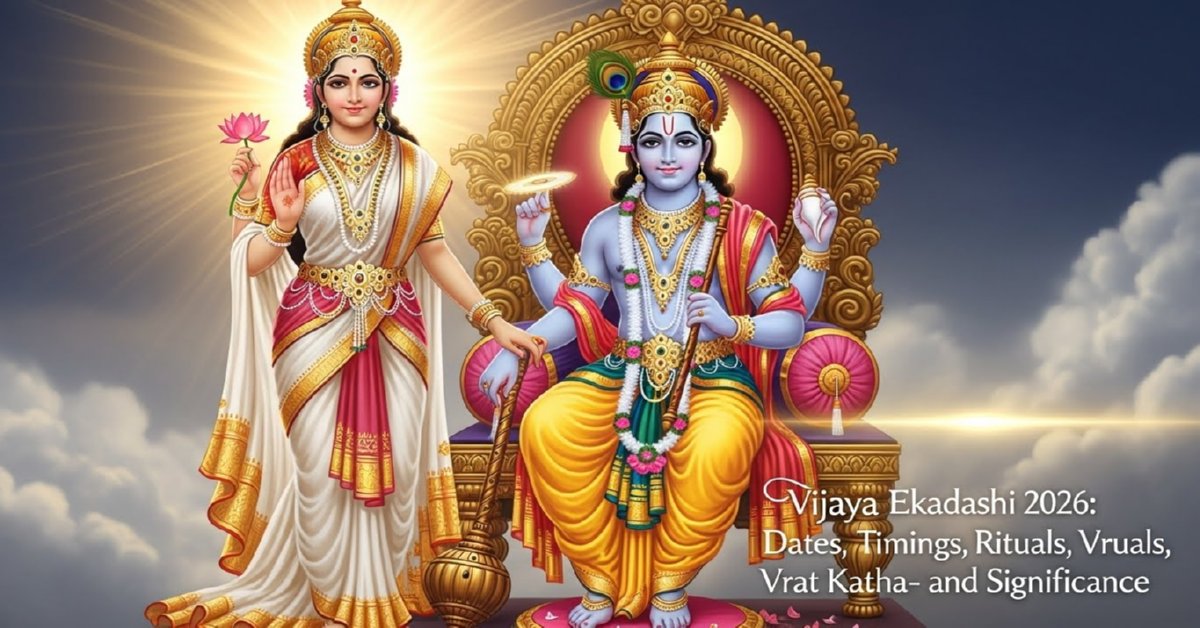
Vijaya Ekadashi 2026 Dates and Timings
Calculated according to the Hindu Panchang for New Delhi, India (IST), the timings ensure accurate observance. Variations may occur by location; consult a local astrologer or panchang for precision.
- Date: Friday, February 13, 2026
- Ekadashi Tithi Begins: 12:22 PM on February 12, 2026
- Ekadashi Tithi Ends: 02:25 PM on February 13, 2026
- Parana Time (Breaking the Fast): 08:25 AM to 09:14 AM on February 14, 2026
- Hari Vasara End Time: Approximately 08:25 AM on February 14, 2026
- Dwadashi End Moment: 04:01 PM on February 14, 2026
The fast commences at sunrise on February 13 and concludes during the parana window on February 14, avoiding the Hari Vasara period.
Significance of Vijaya Ekadashi
Vijaya Ekadashi, meaning ‘victorious Ekadashi,’ is celebrated for its power to bestow triumph in all endeavors, as per ancient scriptures like the Padma Purana and Skanda Purana. It symbolizes overcoming inner vices, external challenges, and karmic sins. Devotees fast to invoke Lord Vishnu’s blessings for success in battles—be they personal, professional, or spiritual. This Ekadashi is particularly auspicious during Phalguna, aligning with themes of renewal and victory, preparing for festivals like Holi.
It is believed to wipe away sins from multiple lifetimes, grant mental strength to conquer grief and anxiety, and ensure victory over enemies or legal disputes. Observing it leads to eternal glory and moksha (liberation).
Vrat Katha: Stories of Vijaya Ekadashi
The Vrat Katha of Vijaya Ekadashi is richly detailed in the Padma Purana and echoes in the Ramayana epic. Here is the complete narrative:
King Yudhishthira once asked Lord Krishna about the Ekadashi in the Krishna Paksha of Phalguna. Lord Krishna recounted how Sage Narada inquired the same from Lord Brahma. Brahma explained that Vijaya Ekadashi purges vices and ensures victory.
The story unfolds during Lord Rama’s exile. With Sita and Lakshmana in Panchavati forest, Ravana abducted Sita. Rama, searching for her, met the dying Jatayu, defeated Kabandha, allied with Sugriva, and assembled the Vanara army. Hanuman crossed to Lanka, met Sita, and returned with news. To invade Lanka, Rama needed to cross the vast ocean but faced insurmountable challenges.
Lakshmana suggested consulting Sage Bakadalbhya, residing nearby. Rama approached the sage, fasting for days in devotion, and asked how to cross the ocean and defeat Ravana. The sage advised observing Vijaya Ekadashi with specific rituals: filling an urn with water on Dashami, placing a Vishnu idol, offering puja with sapta dhanya, incense, and lamps on Ekadashi, maintaining a night vigil, and donating the urn on Dwadashi.
Rama, Lakshmana, and the army followed these instructions devoutly. Pleased, Lord Vishnu (and the ocean god) granted them passage. They built the Ram Setu bridge, crossed the ocean, battled Ravana’s forces, and Rama emerged victorious, rescuing Sita.
Brahma concluded that this fast brings worldly success and eternal liberation. Krishna affirmed that reading or listening to this katha equals performing a Vajapeya Yagya, yielding immense merits.
This legend underscores the vrat’s power, making it a beacon for devotees seeking triumph.
Rituals and Fasting Guide for Vijaya Ekadashi
Observing Vijaya Ekadashi involves meticulous rituals spanning Dashami to Dwadashi. It can be Nirjala (waterless) or Phalahar (fruits and milk). Follow this detailed guide:
- Preparation on Dashami (Day Before): Consume a single Sattvic meal without grains, beans, onions, or garlic. Avoid Tamasic foods and physical indulgences. Fill a Kalash (urn of clay, copper, silver, or gold) with water, add a mango twig or pallav, and place seven grains (Sapta Dhanya: Barley, Sesame, Rice, Foxtail Millet, Green Gram, Chickpea, Wheat) beneath it. Position an idol or image of Lord Vishnu or Rama on top.
- On Ekadashi Day: Wake at Brahma Muhurta, bathe, and wear clean clothes. Perform puja on the Kalash with sandalwood, betelnut, yellow flowers, Tulsi leaves, fruits, incense, and ghee lamps. Chant mantras like “Om Namo Bhagavate Vasudevaya” or Vishnu Sahasranama. Abstain from grains, pulses, rice, and non-vegetarian items. Permitted foods: Fruits, nuts, milk, potatoes, buckwheat, sabudana. Maintain positive thoughts and recite scriptures.
- Night Vigil (Jagran): Stay awake chanting bhajans, reading Ramayana or Bhagavad Gita, and meditating on Lord Vishnu. Light diyas with ghee for enhanced benefits.
- On Dwadashi (Parana Day): At sunrise, perform final puja on the Kalash near a river or pond. Donate the Kalash and useful items to a Brahmin or the needy. Break the fast during the parana window with Sattvic food, starting with fruits or Tulsi water.
Special emphasis: Focus prayers on victory and obstacle removal. Families can observe together for collective blessings.
Vijaya Ekadashi and the 24 Vaikuṇṭha Chakras in the Sri Amit Ray Tradition
In the Sri Amit Ray tradition of 114 chakras and 256 chakras, the 24 Vaikuntha Chakras are fundamental. The 24 Vaikuntha Chakras—divine energy centers revealed to Sri Amit Ray in 2005 during nirvikalpa samadhi as gate ways to the eternal abode of Lord Vishnu in higher dimensions.
The 24 Vaikuntha Chakras are totally different from the traditional basic 7 chakras. The 24 Vaikuṇṭha Chakras function beyond the physical, pranic, and emotional energy bodies; they belong to a supra-neural, supra-emotional field of consciousness that governs ethical intelligence, cosmic order awareness, and Vishnu-tattva realization. These chakras are not anatomical or spinal centers but transcendental coherence nodes that activate only when the practitioner’s awareness moves beyond ego-bound sensory identity.
The Vijaya Ekadashi is understood not merely as a fasting observance but as a precise consciousness-alignment day that activates the 24 Vaikuntha Chakras—a subtle neuro-spiritual network corresponding to the 24 spiritual gateways of Vishnu-consciousness within the human system. These chakras are envisioned as ascending planes of inner sovereignty, each governing a distinct dimension of ethical clarity, cognitive purity, autonomic balance, and transcendental perception.
Vijaya Ekadashi, falling in the Krishna Paksha, is symbolically linked with inner conquest—vijaya over inertia, egoic conditioning, and karmic latency—thereby facilitating synchronized resonance across all 24 Vaikuṇṭha Chakras. Through fasting, mantra, and disciplined sensory restraint on this day, the practitioner reduces metabolic and neural noise, allowing these chakras to enter a coherent phase-locked state that supports victory over internal fragmentation and the stabilization of higher Vishnu-bhava (sustained divine awareness).
In the Sri Amit Ray tradition, Vijaya Ekadashi, observed on the eleventh day of the waning moon in the Phalguna month (falling on February 13, 2026), is revered as a potent fasting day for achieving spiritual victory over inner obstacles, aligning deeply with the activation of the Vaikuntha Chakras.
This Ekadashi’s emphasis on triumph and liberation resonates with the chakras’ role in dissolving ‘kunthas’ (ego, fear, and separation), facilitating moksha through practices like 36-hour fasting, bhakti meditation, silence, and chanting mantras such as “Om Namo Narayanaya,” which stir these trans-physical lotuses of consciousness, including key ones like the Sarva-Kuntha-Nashaka Chakra for obstacle removal and the MahaVishnu-Samadhi Chakra for divine absorption. By purifying the body and mind during Vijaya Ekadashi, devotees in this tradition awaken these 24 chakras, part of the broader 114-chakra system, to experience infinite expansion, compassion, and unity with the Divine, transcending material bonds toward eternal bliss in Vaikuntha Loka.
Benefits of Observing Vijaya Ekadashi 2026
This vrat detoxifies the body, sharpens the mind, and purifies the soul. Spiritually, it absolves sins, grants moksha, and ensures Lord Vishnu’s abode in Vaikuntha. Worldly benefits include victory in endeavors, resolution of disputes, mental resilience against anxiety, and prosperity. Equivalent to grand yagyas, it amplifies merits when shared through katha recitation.
Frequently Asked Questions (FAQ) on Vijaya Ekadashi 2026
1. What is the date of Vijaya Ekadashi in 2026?
Friday, February 13, 2026.
2. What are the tithi timings for Vijaya Ekadashi 2026?
Begins at 12:22 PM on February 12 and ends at 02:25 PM on February 13.
3. When is the parana time for Vijaya Ekadashi 2026?
07:00 AM to 09:14 AM on February 14, 2026.
4. What is the significance of Vijaya Ekadashi?
It grants victory over obstacles, enemies, and sins, leading to success and moksha.
5. What is the main story behind Vijaya Ekadashi?
The Vrat Katha involves Lord Rama observing the fast to cross the ocean and defeat Ravana, as advised by Sage Bakadalbhya.
6. How to perform Kalash Sthapana for Vijaya Ekadashi?
On Dashami, fill a urn with water, add a twig, place sapta dhanya, and install Lord Vishnu’s idol.
7. What foods are allowed during Vijaya Ekadashi fast?
Fruits, milk, nuts, potatoes, buckwheat; avoid grains, pulses, and rice.
8. Is night vigil mandatory for Vijaya Ekadashi?
Yes, staying awake chanting mantras enhances benefits.
9. What are the benefits of reading Vijaya Ekadashi Vrat Katha?
It equals performing a Vajapeya Yagya, yielding immense spiritual merits.
10. Can anyone observe Vijaya Ekadashi?
Yes, it’s open to all ages and genders for overcoming challenges.
11. How do timings differ by location?
Based on local sunrise/sunset; use a regional panchang.
12. What to do if I miss the parana time?
Break the fast after Dwadashi tithi ends, but ideally within the window for full benefits.
May your observance of Vijaya Ekadashi 2026 bring you unparalleled victory and divine grace from Lord Vishnu.