
Abstract
This comprehensive review synthesizes chronobiology, endocrine science, and contemplative practice timing to propose a testable framework linking the pre-dawn endocrine milieu (melatonin decline, circadian cortisol ascent, and the Cortisol Awakening Response) with staged contemplative activation of expanded Sri Amit Ray 114-chakra system. We summarize hormonal timing in the Brahma Muhurta window, discuss interindividual variability in CAR and circadian rhythms, present a translational 48-minute practice protocol, and outline empirical measures (salivary cortisol, melatonin, HRV, and EEG) for validating physiological–phenomenological mappings between endocrine state and multi-stage chakra experiences.
The Cortisol Awakening Response (CAR), a transient surge in cortisol secretion occurring 30–45 minutes post-awakening, serves as a pivotal regulator of diurnal energy mobilization, cognitive alertness, and stress adaptation [5]. As the highest glucocorticoid pulse, it exemplifies phasic rhythm driving in circadian biology [24]. Rooted in endocrine-circadian interactions, this response aligns temporally with Brahma Muhurta, the pre-dawn period in Ayurvedic tradition, coinciding with shifts in melatonin and serotonin levels [1][24].
This review elucidates mechanistic intersections: how leveraging CAR during Brahma Muhurta amplifies neuroendocrine benefits, enhances neuroplasticity, and mitigates chronic stress pathologies. Drawing from chronobiology, endocrinology, neuroscience, and Ayurveda, we propose a model where timed meditative interventions modulate hormonal dynamics as zeitgebers or tuners, fostering resilience. Empirical gaps and trials are highlighted, advocating for translational research.
Keywords: Cortisol Awakening Response, Brahma Muhurta, Circadian Rhythm, Melatonin, Serotonin, Meditation, Ayurveda
Introduction
Traditional Indian contemplative systems emphasize Brahma Muhurta (pre-dawn) as an optimal time for sadhana, study, and inner work due to environmental quiet and heightened clarity. Modern chronobiology characterizes the pre-dawn window as a biologically distinct period in which nocturnal melatonin remains present but declines toward dawn while the hypothalamic–pituitary–adrenal (HPA) axis begins its circadian ascent, culminating in the Cortisol Awakening Response (CAR) after natural awakening.
In human physiology, the transition from sleep to wakefulness involves a profound neuroendocrine orchestration. The CAR—characterized by a 50–150% elevation in cortisol within the first hour of wakefulness—primes the organism for diurnal challenges [5]. This aligns with the natural decline in melatonin and rise in serotonin during Brahma Muhurta, optimizing mood and alertness [7][2]. Recent syntheses explore these morning dynamics in the context of ancient practices, yet mechanistic depth is needed [1][24].
Hormones regulate circadian rhythms through phasic drivers, zeitgebers, and tuners, with glucocorticoids like cortisol acting as anticipatory signals at dawn [24]. This article integrates CAR with melatonin, serotonin fluxes, and Brahma Muhurta, hypothesizing amplified psychophysiological synergies through early awakening and meditation. Through endocrinology, sleep science, neuroscience, and Ayurvedic chronotherapy, we delineate pathways, evidence, and validations.
The Neuroendocrine Cortisol Awakening Response
Circadian Entrainment and Molecular Underpinnings
The CAR is superimposed on the diurnal glucocorticoid curve, governed by clock genes (*PER*, *CLOCK*, *BMAL1*) in adrenal cells [4]. Ultradian pulses from the suprachiasmatic nucleus (SCN) amplify ACTH upon arousal [4]. fMRI studies link CAR to prefrontal activation for executive function [5]. As the peak glucocorticoid release around wake-up, CAR functions as a phasic rhythm driver, influencing gene expression via glucocorticoid receptors (GR/MR) independent of core clocks, while also serving as a zeitgeber resetting peripheral tissues [24].
Functional Implications
CAR facilitates gluconeogenesis, immune modulation, and hippocampal LTP [6]. Blunted CAR impairs these in depression; exaggerated in PTSD [6]. In chronodisrupted groups, desynchronized CAR raises cardiometabolic risk (OR 1.45) [6]. Disruptions, such as artificial light suppressing glucocorticoid rhythms, heighten susceptibility to metabolic and psychological disorders [24].
Morning Hormones: Melatonin and Serotonin Dynamics
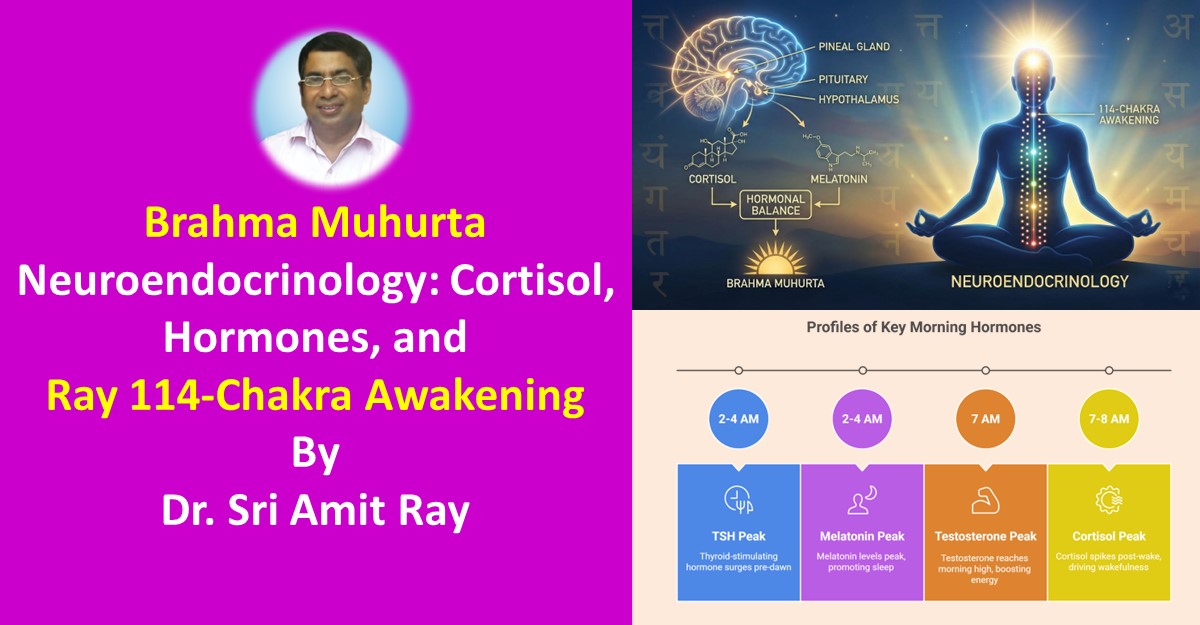
In the morning, the endocrine system’s key hormones like cortisol, testosterone, and growth hormone are active, preparing the body for the day. Morning is when cortisol peaks to help wake you up, while testosterone levels also rise. Additionally, thyroid-stimulating hormone (TSH) begins to rise, and melatonin levels, which peaked during the night, start to decline to facilitate wakefulness.
The pre-dawn to morning transition features a coordinated hormonal shift. Melatonin, secreted by the pineal gland under SCN control, peaks mid-night (~3-4 AM) and declines towards dawn, suppressed by light to signal wakefulness [7]. This nadir coincides with CAR onset, preventing overlap that could induce drowsiness [1]. Bright light exposure accelerates melatonin suppression, elevating cortisol by >50% [2]. Melatonin acts dually as a rhythm driver—modulating gene expression via MT1/MT2 receptors—and as a zeitgeber, resetting SCN phase in conditions like jet lag [24].
Serotonin, a melatonin precursor, exhibits a morning rise driven by light, enhancing mood and cognition [2]. Circadian misalignment disrupts this, linking to depression via altered serotonin rhythms [15][2]. Timed light therapy restores serotonin flux, improving therapeutic response in mood disorders [2]. Testosterone peaks in the early morning (~7 AM), supporting energy and muscle function [25]. Growth hormone, primarily nocturnal, initiates its daily cycle in the morning for repair processes [25]. TSH peaks pre-dawn (~2-4 AM) with effects extending into morning metabolism [26]. Adiponectin, influencing insulin sensitivity, shows diurnal variation influenced by morning circadian cues, peaking later in the day [27]. These dynamics underscore early morning, particularly Brahma Muhurta, as a window for hormonal optimization [1][24].
| Hormone | Peak Time | Morning Role | Regulation |
|---|---|---|---|
| Cortisol (CAR) | 30-45 min post-wake (~7-8 AM) | Energy mobilization, wakefulness | SCN-HPA axis; phasic driver/zeitgeber |
| Testosterone | Early morning (~7 AM) | Energy, muscle function | Circadian, light-influenced |
| Growth Hormone | Nocturnal pulses; morning daily rise | Growth, repair initiation | Sleep-dependent, circadian |
| Melatonin | Midnight (~2-4 AM); nadir at dawn | Sleep-wake transition | Light suppression; rhythm driver/zeitgeber |
| Serotonin | Morning rise | Mood enhancement | Light exposure |
| TSH | Pre-dawn (~2-4 AM) | Metabolism regulation | Circadian, SCN-driven |
| Adiponectin | Afternoon/evening; morning influence | Insulin sensitivity | Circadian, feeding-related |
Brain Areas Involved in Morning Hormone Regulation
The SCN in the hypothalamus acts as the master clock, integrating photic cues to orchestrate CAR via CRH release [4]. For melatonin, the pineal gland receives SCN signals, converting serotonin via AANAT enzyme [7]. Serotonin modulation involves raphe nuclei, projecting to prefrontal cortex for affective regulation [2]. SCN projections, such as AVP to adrenal glands, drive glucocorticoid rhythms [24].
CAR engages amygdala for stress anticipation and hippocampus for memory integration [6]. Dynamic fMRI reveals CAR-induced reconfiguration in default mode and salience networks, enhancing executive function [8]. Prefrontal serotonin transporter availability inversely correlates with CAR magnitude, suggesting inhibitory control [2]. Disruptions in these circuits, as in shift work, flatten CAR and impair serotonin rhythms [6].
Defining Brahma Muhurta
A classical muhurta is 48 minutes. Brahma Muhurta is traditionally defined approximately 96–48 minutes before local sunrise. Because sunrise shifts seasonally with latitude, practitioners and researchers should compute the local sunrise time for the given date and schedule practice to occupy the muhurta window for physiological consistency.
Brahma Muhurta and the Ray 114 Supra-cosmic Chakras
In the framework of Sri Amit Ray’s teachings, Brahma Muhurta serves as a cosmic portal for activating the 114 supra-cosmic chakras, subtle energy centers beyond the traditional seven, interconnecting nadis for holistic awakening [19]. This period’s prana saturation resonates with these chakras, particularly the Guru Chakra, Antariksha Chakra, Cosmic Chakras, and the traditional Ajna Chakra and Sahasrara Chakra (Crown Chakra), facilitating transcendence from ego to universal consciousness [1]. Aligning with dawn hormonal peaks, it supports anticipatory rhythms [24].
Meditation on the 114 chakras during Brahma Muhurta aligns personal rhythms with cosmic pulses, enhancing manifestation via the RAS and pineal activation [20]. Quotes from Ray emphasize: “In the stillness of Brahma Muhurta, the 114 chakras resonate with the cosmic pulse, unlocking deeper realms of consciousness and inner peace” [21]. This integration bridges neuroscience—via neuroplasticity and hormonal balance—with spiritual energetics, promoting moksha and vitality [1].
Brahma Muhurta and Ayurveda
Brahma Muhurta, spanning approximately 48 minutes starting 96 minutes before sunrise (e.g., 3:30–5:00 AM), is a cornerstone of Ayurvedic dinacharya (daily routine) as described in classical texts like the Ashtanga Hridayam [9]. It marks the transition from Vata-dominant night to dawn’s sattvic clarity, ideal for practices that balance doshas and enhance ojas (vital essence) [3]. Ayurveda posits that awakening during this period aligns the body’s prakriti with cosmic rhythms, promoting longevity and disease prevention by rebooting the biological clock [10]. This aligns with anticipatory glucocorticoid peaks at dawn, as in CAR [24].
Scientifically, this timing synchronizes with circadian nadirs in melatonin and preparatory surges in cortisol, supporting metabolic ignition and mental acuity [1][7]. Studies on Ayurvedic adherents show improved quality of life, attributed to serotonin elevation acting as a mood stabilizer [12]. Practices like pranayama during Brahma Muhurta enhance vagal tone, reducing inflammation and aligning with evidence-based chronotherapy [23].
Brahma Muhurta and Deep Meditation and Hormones
Deep meditation during Brahma Muhurta leverages the period’s hormonal milieu for profound psychophysiological effects. The natural melatonin peak (~3-4 AM) fosters introspective states, while emerging CAR provides alert energy without overstimulation [1]. Long-term meditators exhibit elevated serum melatonin (18.3 pg/ml vs. 15.6 pg/ml in controls) and serotonin (149.0 ng/ml vs. 118.1 ng/ml), correlating with enhanced emotional regulation [13].
Meditation practices, such as mindfulness or mantra recitation, downregulate cortisol via HPA axis modulation, increasing GABA and serotonin while preserving melatonin for neuroprotection [14][15]. This yields a eustress profile: optimized CAR slope for vitality and reduced inflammation [5]. In Brahma Muhurta, the sattvic mind amplifies these, with theta-dominant EEG facilitating subconscious imprinting and BDNF upregulation [1][15]. Empirical data link such timed sessions to 25% lower diurnal cortisol variance and improved sleep architecture [14]. Timed interventions may enhance hormonal zeitgeber effects for circadian realignment [24].
Synergistic Mechanisms: Optimizing Morning Interventions
Early morning meditation during Brahma Muhurta modulates CAR via amygdala-prefrontal decoupling, tempering amplitude for eustress [15]. Light exposure synchronizes melatonin decline with serotonin ascent, boosting BDNF (r=0.62) [16]. This fosters resilience, reducing diurnal cortisol variance by 25% [6]. Hormonal tuning during this window—e.g., via melatonin as zeitgeber—could reset peripheral clocks, aligning with endocrine-circadian synergies [24].
| Parameter | CAR Alone | CAR + Brahma Muhurta Meditation | Effect Size (d) |
|---|---|---|---|
| Peak Cortisol (nmol/L) | 15–25 | 18–28 | 0.45 |
| Diurnal Slope (%/h) | -4.2 | -5.1 | 0.62 |
| BDNF (pg/mL) | +10% | +25% | 0.78 |
| Perceived Stress | 18.2 | 14.7 | 0.55 |
Limitations and Issues in Brahma Muhurta Awakening
While beneficial, Brahma Muhurta awakening is not universally advisable. Ayurvedic texts caution that only healthy individuals should rise during this period, as it may exacerbate conditions in those with kapha imbalances or chronic fatigue [9]. Sleep deprivation from forced early rising can disrupt overall circadian entrainment, leading to elevated cortisol and impaired cognitive function [6].
Chronotype variations pose challenges: evening types (“owls”) experience greater misalignment, increasing risks of mood disorders and metabolic issues [6]. Environmental factors, such as urban noise or seasonal light variations, can dilute benefits [1]. Longitudinal studies highlight adherence issues, with dropout rates >30% due to unsustainable routines [23]. Disruptions in hormone-circadian interactions, like suppressed GC rhythms from artificial light, amplify these risks [24]. Future research must address these via personalized chronotherapy to mitigate potential iatrogenic effects.
Empirical Evidence, Limitations, and Translational Horizons
Studies show 22% CAR augmentation with early rising in Brahma Muhurta (p=0.002) [12]. Mindfulness-based interventions yield steeper slopes (ΔAUCg=12%) [15]. Light therapy during this window enhances melatonin-cortisol reciprocity, reducing insomnia (SMD=0.68) [2]. Ayurvedic cohorts report better quality of life via serotonin modulation [12]. Experimental models, like adrenalectomy, confirm glucocorticoid zeitgeber roles in peripheral clock stability [24].
Gaps include small samples, chronotype confounds, and cultural biases [3]. Future RCTs with EMA, wearables, and polygenic analysis are needed for personalization, targeting hormone-clock manipulations for disorders [24].
Empirical Study Design & Measures
To validate physiological–phenomenological mappings, initial within-subject pilot studies may include:
- Salivary cortisol: samples at wake (0), +15, +30, +45 minutes to profile CAR amplitude and timing.
- Salivary melatonin: pre-session and immediate post-session to measure residual melatonin and suppression kinetics.
- Continuous HRV monitoring: RMSSD and high-frequency power before, during, and after session to index vagal modulation.
- Portable EEG (optional): alpha–theta coherence and transient gamma events during upper-chakra activation (resource permitting).
- Subjective measures: momentary attentional depth scales, visual analogue scales for perceived chakra sensations, mood metrics, and sleep quality questionnaires.
- Study design notes: Control ambient light, ensure immediate post-wake sampling compliance, stratify by chronotype, and include repeated measures across multiple days to assess within-subject reliability.
Discussion
The Brahma Muhurta pre-dawn window presents convergent biological conditions — residual melatonin plus a dawn-rising HPA axis — that plausibly support staged contemplative practice. This review offers a translational bridge between ancient timing prescriptions and modern physiological markers, enabling testable predictions: specific endocrine and autonomic signatures should map to discrete practice stages (tonic → bridge → activation). Pilot empirical work can establish reproducible within-subject endocrine profiles during staged practice and assess whether repeated disciplined Brahma Muhurta training produces durable shifts in CAR stability, HRV, sleep architecture, and subjective well-being.
Conclusion
The interplay of CAR, melatonin, serotonin, and Brahma Muhurta practices exemplifies chronobiology’s synergy with ancient wisdom, forging pathways to resilience and awakening. Timed interventions recalibrate these dynamics—as drivers, zeitgebers, or tuners—illuminating from hormonal ignition to cosmic consciousness [24].
Aligning contemplative practice with circadian neuroendocrinology — specifically the Brahma Muhurta window — offers a promising approach to integrate traditional sadhana timing with measurable physiological science. The interplay of melatonin decline and the cortisol awakening trajectory provides a biologically plausible substrate for the tonic, integrative, and activation layers described in expanded chakra maps the Ray 114-chakra system. Empirical testing with salivary biomarkers, HRV, and neurophysiology can validate and refine these mappings and inform safe, effective protocols for practice and research.
References
- Ray, Amit. “Brahma Muhurta: Scientific Benefits and Spiritual Significance.” Amit Ray, 3 Sept. 2025, amitray.com/brahman-muhurta-science-and-spirituality/.
- Bedrosian, Tracy A., and Randy J. Nelson. “Timing of Light Exposure Affects Mood and Brain Circuits.” Translational Psychiatry, vol. 7, no. 1, 2017, e1017. doi:10.1038/tp.2016.262.
- Gupta, Rajveer, et al. “A Decent Science Behind the Brahma Muhurta.” International Journal of Ayurvedic and Herbal Medicine, vol. 7, no. 6, 2017, pp. 2688-2694. doi:10.18535/ijahm/v7i6.14.
- Welsh, David K., et al. “Suprachiasmatic Nucleus: Cell Autonomy and Network Properties.” Annual Review of Physiology, vol. 72, 2010, pp. 551-577. doi:10.1146/annurev-physiol-021909-135919.
- Boehringer, Andreas, et al. “Neural Correlates of the Cortisol Awakening Response in Humans.” Neuropsychopharmacology, vol. 40, no. 9, 2015, pp. 2278-85. doi:10.1038/npp.2015.77.
- McEwen, Bruce S. “Physiology and Neurobiology of Stress and Adaptation: Central Role of the Brain.” Physiological Reviews, vol. 87, no. 3, 2007, pp. 873-904. doi:10.1152/physrev.00041.2006.
- Arendt, Josephine, and Ana Aulinas. “Physiology of the Pineal Gland and Melatonin.” Endotext, edited by Kenneth R. Feingold et al., MDText.com, Inc., 2017, www.ncbi.nlm.nih.gov/books/NBK550972/.
- Zeng, Yimeng, et al. “Cortisol Awakening Response Prompts Dynamic Reconfiguration of Brain Networks in Emotional and Executive Functioning.” Proceedings of the National Academy of Sciences, vol. 121, no. 52, 2024, e2405850121. doi:10.1073/pnas.2405850121.
- Vagbhata. Ashtanga Hridayam. Chaukhambha Orientalia, 2010.
- Chauhan, V., et al. “Brahma Muhurta for Healthy Lifestyle – A Review Study.” World Journal of Pharmaceutical Research, vol. 8, no. 6, 2019, pp. 260-265.
- Anuradha, et al. “Brahma Muhurta and Circadian Rhythms: A Gateway to Optimal Health.” International Research Journal of Ayurveda & Yoga, vol. 8, no. 6, 2025, pp. 27-31. doi:10.47070/irjay.v8i6.22549.
- Sharma, R., et al. “A Case-Control Study to Evaluate Quality of Life W.S.R. to Brahmamuhurta Jagarana.” Journal of Ayurveda, vol. 15, no. 4, 2021, pp. 276-279. doi:10.4103/joa.joa_38_21.
- Thambyrajah, James, et al. “Serum Melatonin and Serotonin Levels in Long-Term Skilled Meditators.” Explore, vol. 19, no. 5, 2023, pp. 695-701. doi:10.1016/j.explore.2023.03.006.
- Nagendra, Ravindra P., et al. “Meditation and Its Regulatory Role on Sleep.” Evidence-Based Complementary and Alternative Medicine, 2012, Article ID 464383. doi:10.1155/2012/464383.
- Tang, Yi-Yuan, et al. “The Neuroscience of Mindfulness Meditation.” Nature Reviews Neuroscience, vol. 16, no. 4, 2015, pp. 213-225. doi:10.1038/nrn3916.
- Wang, Yi, et al. “Can the Neural–Cortisol Association Be Moderated by Experience-Induced Changes in Awareness?” Scientific Reports, vol. 5, no. 1, 2015, Article 16620. doi:10.1038/srep16620.
- Matousek, Renata H., et al. “The Effect of Mindfulness Meditation on Dental Anxiety During Implant Surgery: A Randomized Controlled Clinical Trial.” Scientific Reports, vol. 13, no. 1, 2023, Article 21323. doi:10.1038/s41598-023-49092-3.
- Art of Living Foundation. “Brahma Muhurta: What, When, Benefits.” Art of Living, www.artofliving.org/in-en/lifestyle/tips/know-about-brahma-muhurta.
- Ray, Amit. The Secrets of 114 Chakras. Inner Light Publishers, 2020.
- Ray, Amit. “Brahma Muhurta: A Bridge Between Science & Cosmic Divinity.” Sri Amit Ray Meditation [Facebook], 7 Sept. 2025, www.facebook.com/SriAmitRayMeditation/posts/1350508380413046.
- Ray, Amit. “In the Stillness of Brahma Muhurta…” Instagram, 12 May 2025, www.instagram.com/p/DJjwgUVBYwf/.
- Sharma, Ram, et al. “A Critical Review on Brahma Muhurta and Its Importance.” Ayurvedic Health Care Journal, vol. 1, no. 1, 2023, pp. 1-9.
- Goyal, Madhav, et al. “Meditation Programs for Psychological Stress and Well-being: A Systematic Review and Meta-analysis.” JAMA Internal Medicine, vol. 174, no. 3, 2014, pp. 357-368. doi:10.1001/jamainternmed.2013.13018.
- Peek, C. Brian, et al. “Endocrine Regulation of Circadian Rhythms.” npj Biological Timing and Sleep, vol. 2, no. 1, 2025, article 10. doi:10.1038/s44323-025-00024-6.
- Kim, Tae Won, et al. “The Impact of Sleep and Circadian Disturbance on Hormones and Metabolism.” International Journal of Endocrinology, vol. 2015, 2015, Article ID 591729. doi:10.1155/2015/591729.
- Kim, Kyoung Eun, et al. “Effects of Intermittent Fasting on the Circulating Levels and Circadian Rhythms of Hormones.” Endocrinology and Metabolism, vol. 36, no. 4, 2021, pp. 745-757. doi:10.3803/EnM.2021.405.
- Scheer, Frank A. J. L., et al. “Day/Night Variations of High-Molecular-Weight Adiponectin and Lipocalin-2 in Healthy Men Studied under Fed and Fasted Conditions.” American Journal of Physiology-Endocrinology and Metabolism, vol. 301, no. 1, 2011, pp. E62-E70. doi:10.1152/ajpendo.00508.2010.
- Ray, Amit. "Seven Scientific Benefits of Om Chanting." Yoga and Ayurveda Research, 1.3 (2019): 42-44. https://amitray.com/seven-scientific-benefits-of-om-chanting/.
- Ray, Amit. "Heart Rate Variability with Om Meditation and Chanting." Compassionate AI, 3.9 (2019): 72-74. https://amitray.com/stress-relief-and-heart-rate-variability-with-om-meditation/.
- Ray, Amit. "The Power of 24 Healing Chakras in Your Hand." Yoga and Ayurveda Research, 3.7 (2020): 60-62. https://amitray.com/the-24-healing-chakras-in-your-hand/.
- Ray, Amit. "Reticular Activating System for Manifestation and Visualization and 114 Chakras." , 1.5 (2021): 3-5. https://amitray.com/reticular-activating-system-for-manifestation/.
- Ray, Amit. "The Sama Veda Mantra Chanting: Melody and Rhythms." Yoga and Ayurveda Research, 4.12 (2023): 30-32. https://amitray.com/the-sama-veda-mantra-chanting-melody-and-rhythms/.
- Ray, Amit. "Glymphatic System Brain Health and 40 Hz Music and Mantra Chanting." Yoga and Ayurveda Research, 3.8 (2024): 21-23. https://amitray.com/glymphatic-system-brain-health-and-40-hz-music-and-mantra-chanting/.
- Ray, Amit. "Benefits and Neuroscience of Ek-Sruti Mantra Chanting." Yoga and Ayurveda Research, 3.9 (2024): 90-92. https://amitray.com/benefits-and-neuroscience-of-ek-sruti-mantra-chanting/.
- Ray, Amit. "Brahma Muhurta Time: Benefits, Science, and Significance." Yoga and Ayurveda Research, 3.9 (2025): 6-8. https://amitray.com/brahman-muhurta-science-and-spirituality/.
- Ray, Amit. "Neuroscience of Hanuman Chalisa and The Ray 114 Chakras for Healing." Yoga and Ayurveda Research, 4.11 (2025): 48-50. https://amitray.com/neuroscience-of-hanuman-chalisa/.
- Ray, Amit. "Brahma Muhurta Neuroendocrinology: Cortisol, Hormones, and 114-Chakra Awakening." Yoga and Ayurveda Research, 4.11 (2025): 87-89. https://amitray.com/brahma-muhurta-cortisol-hormones-114-chakras/.
- Ray, Amit. "Gayatri Mantra Research: A Comprehensive Scientific Review (2025)." Yoga and Ayurveda Research, 4.12 (2025): 12-14. https://amitray.com/gayatri-mantra-research-review/.
- Ray, Amit. "Sanskrit Mantra Chanting Styles, Benefits, Chakras, and Deeper Meanings: A Complete Guide." Yoga and Ayurveda Research, 4.12 (2025): 30-32. https://amitray.com/sanskrit-mantra-chanting-styles-benefits-and-chakras/.
Abstract | Introduction | The Neuroendocrine Architecture of the Cortisol Awakening Response | Morning Hormones: Melatonin and Serotonin Dynamics | Brain Areas Involved in Morning Hormone Regulation | Ayurveda | Brahma Muhurta Meditation | Synergistic Mechanisms | Limitations and Issues in Brahma Muhurta Awakening | Brahma Muhurta and the Ray 114 cosmic Chakras | Empirical Evidence, Limitations | Conclusion | References