
Abstract
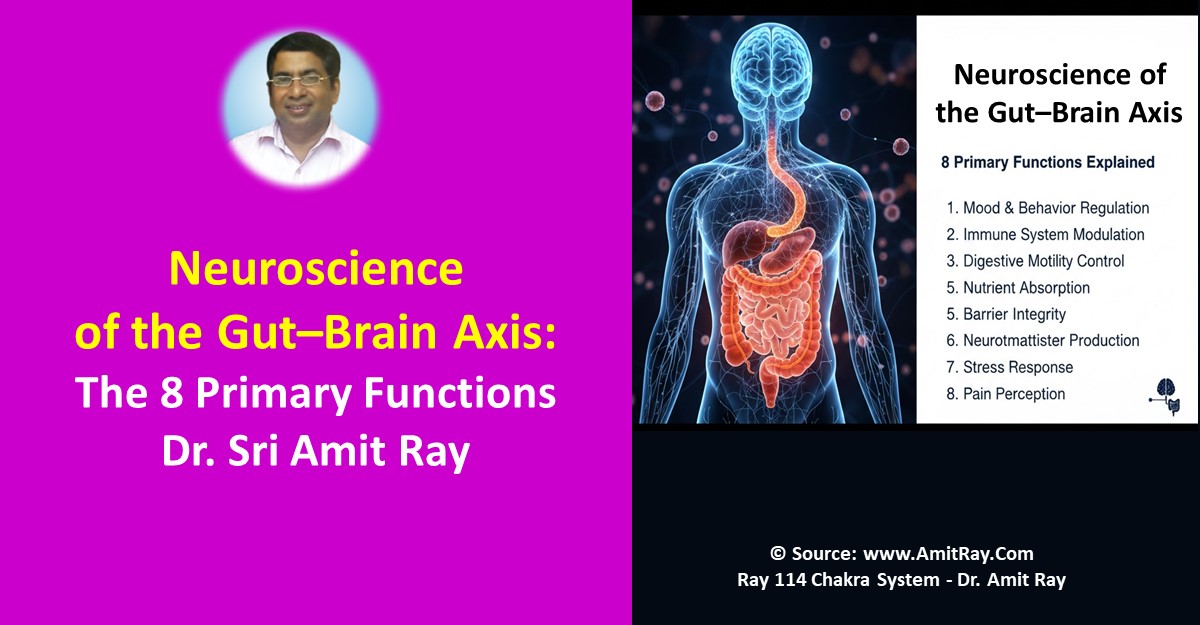
The gut-brain axis (GBA) represents a bidirectional communication network linking the gastrointestinal tract and the central nervous system, profoundly influenced by the gut microbiota. This review synthesizes current evidence on the neuroscience underlying the GBA, focusing on eight primary functions derived from established pathways and mechanisms. These functions encompass mood regulation, stress response modulation, cognitive influences, gut motility control, immune regulation, barrier maintenance, neuroendocrine signaling, and neurodevelopment. Supported by preclinical and clinical studies, these functions highlight the GBA's role in homeostasis and its implications for neurological and psychiatric disorders.
Introduction
The gut–brain axis is now recognized as a fundamental neurobiological system governing emotion, cognition, immunity, and long-term brain plasticity. Far from being a passive digestive conduit, the gastrointestinal tract functions as a distributed neurochemical and immunological organ that continuously communicates with the central nervous system (CNS).
The gut-brain axis is a complex, bidirectional neurohumoral communication system involving the central nervous system (CNS), enteric nervous system (ENS), autonomic nervous system, hypothalamic-pituitary-adrenal (HPA) axis, and gut microbiota. Often termed the microbiota-gut-brain axis, it integrates neural, endocrine, immune, and metabolic pathways to maintain physiological homeostasis. Disruptions in this axis are implicated in disorders ranging from irritable bowel syndrome to depression and neurodegenerative diseases.
This article presents a deep scientific analysis of the gut–brain axis, integrating neuroscience, microbiology, endocrinology, and systems biology, and organizing its role into eight primary functional domains.