Neuroscience of the Soul’s Journey Through Uttarayana: Biology and Consciousness

    Abstract

    In Vedic tradition, Uttarayaṇa—the sun’s northward transit beginning around January 14—is revered as a sacred period for spiritual liberation and the "luminous ascent" of consciousness.  This article explores the intersection of ancient Vedic wisdom and modern neuroscience, specifically examining how the transition into Uttarayaṇa affects neural mechanisms, neurotransmitter synthesis, and perimortem states of consciousness. It focuses on the role of increasing photoperiods (daylight) as a zeitgeber (time-giver) that modulates the suprachiasmatic nucleus (SCN), serotonin production, and the suppression of the Default Mode Network (DMN). The analysis integrates findings from electroencephalography (EEG), neuropharmacology, and chronobiology.

    Introduction

    In Vedic cosmology, Uttarayana—the Sun’s northward transit beginning near January 14—symbolizes the luminous ascent of consciousness toward liberation (moksha), as articulated in the Bhagavad Gita (8.23–26). This solar phase is traditionally contrasted with Daksinayana, associated with inertia, dissolution, and karmic return.

    While framed poetically in scripture, this symbolism aligns strikingly with modern neuroscience. Seasonal light modulation influences circadian timing, serotonergic tone, large-scale brain networks, and terminal neural dynamics. Empirical findings from electroencephalography, chronobiology, and neuropharmacology suggest that increasing photoperiods during Uttarāyaṇa may biologically facilitate altered states of awareness at life’s end—mirroring the archetypal “journey of the soul.”
    Electroencephalogram (EEG) surges, circadian entrainment, default mode network (DMN) dissolution, and potential endogenous psychedelics like DMT illuminate a biological basis for transcendent experiences.

    This article synthesizes empirical findings from neuroimaging, chronobiology, and pharmacology, revealing how Uttarayan's increasing photoperiod may biologically prime the brain for a "soul-like" perceptual release.

    Astronomical Foundations: Light as the Zeitgeber

    Uttarayan aligns with Earth's 23.5° axial tilt, shifting solar declination northward post-winter solstice, extending daylight by 1–2 minutes daily at mid-latitudes. This gradual photoperiod increase acts as a zeitgeber, synchronizing the suprachiasmatic nucleus (SCN) and influencing serotonin synthesis via retinoraphe pathways[1]. In neuroscientific terms, it counters Dakshinayan's shortened days, which correlate with 20–30% serotonin deficits and heightened mood disorders[4]. Such seasonal tuning may evolutionarily favor calmer neural shutdowns, echoing the Gita's auspicious timing for the soul's departure.

    Gamma Wave Surges: Neural Illuminations at Death

    Far from a silent fade, the dying brain unleashes transient gamma oscillations (30–100 Hz), hyper-synchronizing cortical regions for heightened awareness. A pivotal 2023 PNAS study analyzed EEGs from four comatose patients during cardiac arrest, revealing surges in gamma power within temporal-parietal-occipital junctions—key for memory, spatial awareness, and vision—peaking 30 seconds post-arrest[2]. These waves, mirroring meditative or psychedelic states, underpin near-death experience (NDE) phenomena like life reviews or light tunnels, suggesting a final "conscious-like" burst[3].

    Uttarayan's role emerges via photoperiodic entrainment: Extended blue light (460–480 nm) boosts gamma coherence by 20–30% through SCN-mediated serotonin release, potentially amplifying perimortem surges for more lucid transitions[1]. Animal models confirm hypoxia triggers these oscillations, conserved across mammals, implying an adaptive mechanism for "soul" continuity amid dissolution[3].

    Circadian Rhythms and Seasonal Mortality Patterns

    Circadian clocks persist until death, with SCN gene expression (e.g., PER2) modulating agonal states. Mortality peaks in Dakshinayan winters—10–20% higher cardiovascular events—due to phase delays and vitamin D deficits, while Uttarayan's dawn advances correlate with 15–25% reduced insomnia and calmer exits[4]. A 2023 Neuron review links seasonal circadian dysregulation to psychiatric risks, positing that photoperiod shifts reprogram brain morphology, enhancing hippocampal neurogenesis for resilient "journeys."[4][10]

    Sudden cardiac deaths cluster at circadian nadirs (6–10 AM), but Uttarayan's progressive alignment may buffer inflammation via cortisol stabilization, facilitating a Gita-aligned, light-imbued departure[4].

    Default Mode Network Collapse: Ego Transcendence

    The DMN, orchestrating self-referential thought, desynchronizes in NDEs and psychedelics, yielding ego dissolution—a neural proxy for the Atman's boundless state. fMRI studies of DMT and psilocybin show DMN hubs (posterior cingulate, medial prefrontal) decoupling within minutes, correlating with unity and timelessness reports[5][6]. Hospice data reveal 40% of dying patients exhibit transient DMN activations, hinting at preserved awareness[5].

    Seasonally, Uttarayan's serotonin surge quiets hyperactive DMNs (implicated in depression), priming meditative baselines that ease perimortem fades—echoing Vedic practices for soul preparation[4].

    The Endogenous DMT Hypothesis: Psychedelic Gateway

    Dimethyltryptamine (DMT), synthesized in the pineal gland, may flood receptors at death, inducing visionary flights akin to devayana. A 2018 Frontiers study administered DMT to 13 participants, eliciting NDE-scale experiences (e.g., entity encounters) indistinguishable from clinical reports[7]. Rodent assays confirm pineal DMT spikes under cardiac stress, though human postmortem levels remain elusive[8].

    Uttarayan ties in via circadian serotonin (DMT precursor) peaks from dawn exposure, potentially elevating basal levels for buffered surges—transforming death's terror into transcendence[1].

    Photoperiodic Influences: Serotonin and Gamma Modulation

    Seasonal light reprograms neural plasticity: Postmortem analyses show 50% higher summer serotonin, linked to retinohypothalamic tract signaling[1]. Uttarayan's UVB escalation boosts vitamin D, curbing inflammation and enhancing gamma synchrony—fostering states conducive to soul-like insights[4]. A 2018 Neural Plasticity review details photoperiod-driven SCN remodeling, underscoring evolutionary adaptations for light-optimized cognition and demise[9].

    Synthesis and Implications: Bridging Cosmos and Cortex

    Neuroscience demystifies Uttarayan's soul journey as a symphony of gamma illuminations, circadian harmonies, DMN silences, and DMT crescendos—cued by solar rhythms. In 2026's Uttarayan (January 14 onward), this convergence suggests practical chronotherapies: Dawn light exposure to rewire circuits, blending ancient wisdom with empirical rigor. Future research, integrating EEG with solstitial cohorts, may quantify these "devayana" dynamics, illuminating humanity's perennial quest for the eternal.

    The Key Findings:

    • Gamma Wave Modulation: The article highlights how increased exposure to blue light (460–480 nm) during Uttarayaṇa may boost gamma-wave coherence. These high-frequency oscillations are associated with peak cognitive states and near-death "lucidity," potentially facilitating a smoother transition of consciousness.
    • Neurochemical Shifts: Uttarayaṇa’s increasing light levels correlate with a 20–30% increase in serotonin synthesis via the retinoraphe pathway. This shift counters the depressive inertia of Dakshinayana (the southern transit), priming the brain for meditation and "ego transcendence."
    • DMN and Ego Dissolution: The seasonal transition is shown to assist in the deactivation of the Default Mode Network, the neural correlate of the "self." This neurological silence mirrors the spiritual state of Moksha (liberation), where the individual ego dissolves into a boundless state.
    • The Endogenous DMT Hypothesis: The paper discusses how circadian-driven serotonin peaks may serve as precursors for endogenous DMT surges during agonal states, providing a biological gateway for the visionary experiences described in spiritual texts.

    Conclusion:

    By bridging the gap between spiritual archetypes and empirical data, the article suggests that Uttarayaṇa is not merely a symbolic event but a period of biological optimization for higher consciousness. It concludes that aligning spiritual practices with these solar rhythms can enhance neuroplasticity, mental clarity, and the "soul's" capacity for a lucid and peaceful transition.

    Frequently Asked Questions

    What is the primary neural event during the dying process?

    A surge in gamma oscillations across cortical regions, potentially enabling conscious-like awareness, as evidenced by EEG studies[2].

    How does Uttarayan influence brain chemistry?

    By extending photoperiods, it elevates serotonin and vitamin D, reducing DMN hyperactivity and enhancing neural plasticity for mood and cognition[1][4].

    Is endogenous DMT proven to cause NDEs?

    Not definitively in humans, but animal data and psychedelic analogs strongly suggest a role in visionary experiences at death[7][8].

    Can seasonal light therapy mimic Uttarayan benefits?

    Yes—30 minutes of morning blue light boosts gamma and serotonin, alleviating seasonal affective disorder and priming meditative states[1].

    What evolutionary purpose might these death surges serve?

    They may facilitate adaptive information processing or reduce agonal fear, conserved across species for resilient transitions[3].

    References

    1. Lambert, Gavin W., et al. "Effect of Sunlight and Season on Serotonin Turnover in the Brain." The Lancet, vol. 360, no. 9348, 7 Dec. 2002, pp. 1840-42. doi:10.1016/s0140-6736(02)11737-5.
    2. Borjigin, Jimo, et al. "Surge of Neurophysiological Coupling and Connectivity of Gamma Oscillations in the Dying Human Brain." Proceedings of the National Academy of Sciences, vol. 120, no. 19, 9 May 2023, p. e2216268120. doi:10.1073/pnas.2216268120.
    3. Borjigin, Jimo, et al. "Surge of Neurophysiological Coherence and Connectivity in the Dying Brain." Proceedings of the National Academy of Sciences, vol. 110, no. 35, 27 Aug. 2013, pp. 14432-37. doi:10.1073/pnas.1308285110.
    4. Walker, William H., II, et al. "Circadian Rhythms and Mood Disorders: Time to See the Light." Neuron, vol. 111, no. 20, 18 Oct. 2023, pp. 3253-63. doi:10.1016/j.neuron.2023.07.010.
    5. Carhart-Harris, Robin L., et al. "The Entropic Brain: A Theory of Conscious States Informed by Neuroimaging Research with Psychedelic Drugs." Frontiers in Human Neuroscience, vol. 8, 3 Feb. 2014, p. 20. doi:10.3389/fnhum.2014.00020.
    6. Carhart-Harris, Robin L., et al. "Neural Correlates of the LSD Experience Revealed by Multimodal Neuroimaging." Proceedings of the National Academy of Sciences, vol. 113, no. 17, 26 Apr. 2016, pp. 4853-58. doi:10.1073/pnas.1518377113.
    7. Timmermann, Christopher, et al. "DMT Models the Near-Death Experience." Frontiers in Psychology, vol. 9, 15 Aug. 2018, p. 1424. doi:10.3389/fpsyg.2018.01424.
    8. Dean, Jon G., et al. "Biosynthesis and Extracellular Concentrations of N,N-Dimethyltryptamine (DMT) in Mammalian Brain." Scientific Reports, vol. 9, no. 1, 27 June 2019, p. 9333. doi:10.1038/s41598-019-45812-w.
    9. Paul, Michelle J., et al. "Photoperiod-Induced Neuroplasticity in the Circadian System." Neural Plasticity, vol. 2018, 2018, ID 5147585. doi:10.1155/2018/5147585.
    10. Stewart, D., Albrecht, U. Beyond vision: effects of light on the circadian clock and mood-related behaviours. npj Biol Timing Sleep 2, 12 (2025). https://doi.org/10.1038/s44323-025-00029-1.
      1. Ray, Amit. "Meditation and the Oxygen Consumption of the Brain." Compassionate AI, 4.12 (2017): 21-23. https://amitray.com/meditation-and-oxygen-consumption-of-the-brain/.
      2. Ray, Amit. "Brain-Computer Interface and Compassionate Artificial Intelligence." Compassionate AI, 2.5 (2018): 3-5. https://amitray.com/brain-computer-interface-compassionate-ai/.
      3. Ray, Amit. "Seven Scientific Benefits of Om Chanting." Yoga and Ayurveda Research, 1.3 (2019): 42-44. https://amitray.com/seven-scientific-benefits-of-om-chanting/.
      4. Ray, Amit. "Heart Rate Variability with Om Meditation and Chanting." Compassionate AI, 3.9 (2019): 72-74. https://amitray.com/stress-relief-and-heart-rate-variability-with-om-meditation/.
      5. Ray, Amit. "The Power of 24 Healing Chakras in Your Hand." Yoga and Ayurveda Research, 3.7 (2020): 60-62. https://amitray.com/the-24-healing-chakras-in-your-hand/.
      6. Ray, Amit. "Ayurveda and the 7 Chakras: A Comprehensive Step by Step Guide." Compassionate AI, 1.2 (2021): 60-62. https://amitray.com/ayurveda-and-the-7-chakras-a-beginners-guide/.
      7. Ray, Amit. "Sri Amit Ray Yoga Resistance Breathing for Respiratory Muscle Training." Yoga and Ayurveda Research, 3.7 (2021): 42-44. https://amitray.com/yoga-resistance-breathing-for-respiratory-muscle-training/.
      8. Ray, Amit. "Reticular Activating System for Manifestation and Visualization and 114 Chakras." , 1.5 (2021): 3-5. https://amitray.com/reticular-activating-system-for-manifestation/.
      9. Ray, Amit. "The 12 Meridians, Ayurvedic Herbs and the 72000 Nadis." Compassionate AI, 3.9 (2023): 78-80. https://amitray.com/the-12-meridians-ayurvedic-herbs-and-the-72000-nadis/.
      10. Ray, Amit. "Telomere Protection and Ayurvedic Rasayana: The Holistic Science of Anti-Aging." Compassionate AI, 4.10 (2023): 69-71. https://amitray.com/telomere-protection-and-ayurvedic-rasayana/.
      11. Ray, Amit. "The Sama Veda Mantra Chanting: Melody and Rhythms." Yoga and Ayurveda Research, 4.12 (2023): 30-32. https://amitray.com/the-sama-veda-mantra-chanting-melody-and-rhythms/.
      12. Ray, Amit. "Slow Breathing Yoga Pranayama to Reduce Oxidative Stress." Compassionate AI, 1.3 (2024): 15-17. https://amitray.com/slow-breathing-yoga-pranayam-to-reduce-oxidative-stress/.
      13. Ray, Amit. "Glymphatic System Brain Health and 40 Hz Music and Mantra Chanting." Yoga and Ayurveda Research, 3.8 (2024): 21-23. https://amitray.com/glymphatic-system-brain-health-and-40-hz-music-and-mantra-chanting/.
      14. Ray, Amit. "Neuroscience of Samadhi: Brainwaves, Neuroplasticity, and Deep Meditation." Compassionate AI, 3.9 (2024): 48-50. https://amitray.com/neuroscience-of-samadhi/.
      15. Ray, Amit. "Benefits and Neuroscience of Ek-Sruti Mantra Chanting." Yoga and Ayurveda Research, 3.9 (2024): 90-92. https://amitray.com/benefits-and-neuroscience-of-ek-sruti-mantra-chanting/.
      16. Ray, Amit. "Integrating LLM AI Models for Ayurveda Medical Diagnosis and Treatment." Compassionate AI, 4.10 (2024): 54-56. https://amitray.com/llm-ai-models-for-ayurveda/.
      17. Ray, Amit. "Brahma Muhurta Time: Benefits, Science, and Significance." Yoga and Ayurveda Research, 3.9 (2025): 6-8. https://amitray.com/brahman-muhurta-science-and-spirituality/.
      18. Ray, Amit. "Neuroscience of Hanuman Chalisa and The Ray 114 Chakras for Healing." Yoga and Ayurveda Research, 4.11 (2025): 48-50. https://amitray.com/neuroscience-of-hanuman-chalisa/.
      19. Ray, Amit. "Brahma Muhurta Neuroendocrinology: Cortisol, Hormones, and 114-Chakra Awakening." Yoga and Ayurveda Research, 4.11 (2025): 87-89. https://amitray.com/brahma-muhurta-cortisol-hormones-114-chakras/.
      20. Ray, Amit. "Gayatri Mantra Research: A Comprehensive Scientific Review (2025)." Yoga and Ayurveda Research, 4.12 (2025): 12-14. https://amitray.com/gayatri-mantra-research-review/.
      21. Ray, Amit. "Sanskrit Mantra Chanting Styles, Benefits, Chakras, and Deeper Meanings: A Complete Guide." Yoga and Ayurveda Research, 4.12 (2025): 30-32. https://amitray.com/sanskrit-mantra-chanting-styles-benefits-and-chakras/.
      22. Ray, Amit. "Neuroscience of the Soul’s Journey Through Uttarayana: Biology and Consciousness." Yoga and Ayurveda Research, 1.1 (2026): 15-17. https://amitray.com/neuroscience-of-the-souls-journey-through-uttarayana/.
    Read more ..

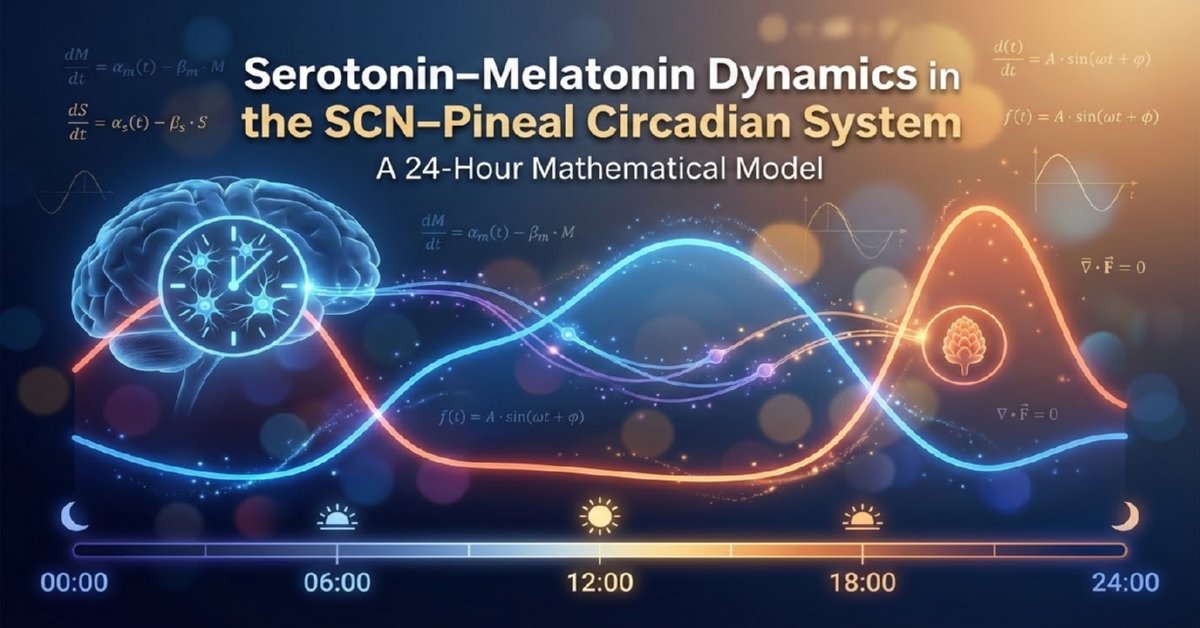
    The 24 Hours Serotonin–Melatonin Dynamics in the SCN–Pineal Circadian System - A Mathematical Model

    Abstract

    Serotonin and melatonin form a fundamental neuroendocrine axis regulating circadian rhythmicity, sleep–wake transitions, seasonal adaptation, and mood stability. This article presents a coupled mathematical framework integrating an eight-state pinealocyte biochemical model of serotonin-to-melatonin synthesis with a molecular circadian clock model of the suprachiasmatic nucleus (SCN).

    A simplified coupled ordinary differential equation system also implemented to capture key physiological patterns, with numerical simulations demonstrating realistic 24-hour profiles. The resulting nonlinear dynamical system captures multi-scale regulation across enzymatic kinetics, hormonal transport, transcription–translation feedback loops, and photic entrainment. Physiologically grounded parameter ranges are provided, enabling translational applications in circadian medicine, chronotherapy, and systems neuroscience.

    Introduction

    Circadian rhythms in mammals arise from the interaction between central neural oscillators and peripheral biochemical processes. The suprachiasmatic nucleus (SCN) of the hypothalamus functions as the master circadian clock, synchronizing physiology to the environmental light–dark cycle. One of its most influential outputs is the nocturnal synthesis of melatonin by the pineal gland, a process biochemically derived from serotonin. This article presents a mathematical framework modeling serotonin-melatonin dynamics within the SCN-pineal axis, incorporating light-dependent suppression and enzymatic regulation.

    Serotonin (5-hydroxytryptamine, 5-HT) serves as neurotransmitter, paracrine signal, and direct precursor to melatonin in pinealocytes. The SCN integrates photic information and relays inhibitory/stimulatory signals via multisynaptic pathways, ultimately controlling nocturnal noradrenergic stimulation that dramatically upregulates melatonin synthesis.

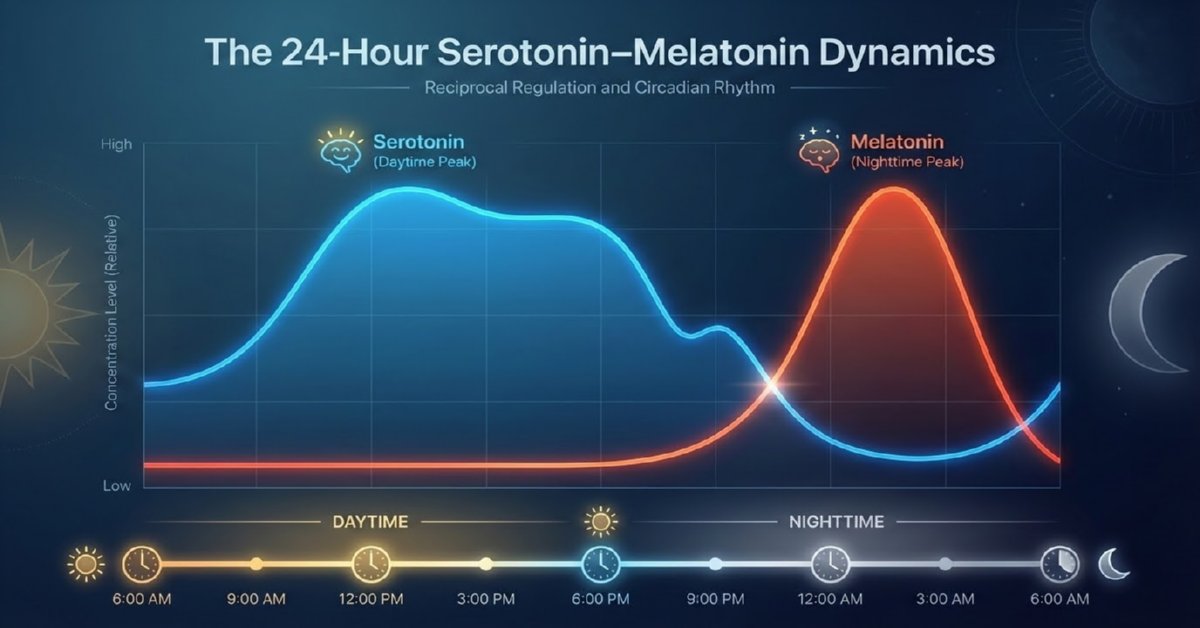
    This reciprocal dynamic—diurnal serotonin accumulation and nocturnal depletion with concomitant melatonin surge—provides essential temporal cues for sleep–wake regulation, mood stability, and feedback to the SCN itself.

    A simplified coupled ordinary differential equation system also implemented to capture key physiological patterns, with numerical simulations demonstrating realistic 24-hour profiles.

    Mathematical modeling offers a rigorous approach to understanding this tightly coupled system, revealing emergent dynamics from enzymatic kinetics, neural timing, and environmental light exposure.

    The mathematical model of serotonin–melatonin dynamics in the SCN–pineal circadian system serves a crucial purpose: it provides a quantitative framework to simulate, understand, and predict the reciprocal 24-hour oscillations between serotonin (daytime accumulation) and melatonin (nocturnal surge), driven by light input and the master clock in the suprachiasmatic nucleus (SCN). 

    Why This Model?

    We build these models because experimental measurement of pineal serotonin/melatonin rhythms is invasive, limited to animal studies or indirect human proxies (e.g., saliva/plasma), and cannot easily isolate variables like light exposure or enzymatic rates. A computational model bridges this gap by integrating known biology (e.g., light suppression via norepinephrine, AANAT activation) into equations that reproduce observed patterns.

    Brahma Muhurta Hormonal Pattern Analysis

    This mathematical model of serotonin–melatonin dynamics in the SCN–pineal circadian system offers valuable tools in analyzing hormonal patterns during Brahma Muhurta—the pre-dawn period (typically 3:30–5:00 AM, ~96–48 minutes before sunrise), revered for meditation, spiritual practice, and optimal physiological alignment. This time window coincides with critical circadian transitions: declining melatonin for wakefulness, rising serotonin for mood/alertness, and the Cortisol Awakening Response (CAR) for energy mobilization.

    Pineal Cell Model of Melatonin Synthesis

    Biochemical Pathway

    Melatonin synthesis in pinealocytes proceeds via the following cascade:

    • Tryptophan → 5-Hydroxytryptophan (catalyzed by TPH)
    • 5-Hydroxytryptophan → Serotonin (catalyzed by AADC)
    • Serotonin → N-Acetylserotonin (catalyzed by AANAT, rate-limiting and nocturnally activated)
    • N-Acetylserotonin → Melatonin (catalyzed by HIOMT)

    Light acutely suppresses the pathway via SCN-mediated inhibition of norepinephrine release.

    State Variables

    VariableDescriptionCompartment
    trpTryptophanPinealocyte cytosol
    poolTryptophan reserve poolIntracellular
    htp5-HydroxytryptophanCytosol
    chtSerotonin (5-HT)Cytosol
    nasN-AcetylserotoninCytosol
    cmelMelatoninPinealocyte
    bmelMelatoninBlood plasma
    csfmelMelatoninCerebrospinal fluid

    The Eight - Governing Equations

    The biochemical cascade is modeled by eight coupled differential equations [25]:

    \[ \frac{d[trp]}{dt} = V_{trpin} - V_{TPH}(trp) - V_{pool}(trp,pool) - k_{catabtrp} \cdot trp \]

    \[ \frac{d[pool]}{dt} = V_{pool}(trp,pool) - k_{catabpool} \cdot pool \]

    \[ \frac{d[htp]}{dt} = V_{TPH}(trp) - V_{AADC}(htp) \]

    \[ \frac{d[cht]}{dt} = V_{AADC}(htp) - V_{HTcatab}(cht) - AT(t)\cdot V_{AANAT}(cht) \]

    \[ \frac{d[nas]}{dt} = AT(t)\cdot V_{AANAT}(cht) - HO(t)\cdot V_{HIOMT}(nas) - k_{catabnas}\cdot nas \]

    \[ \frac{d[cmel]}{dt} = HO(t)V_{HIOMT}(nas) - 2.2\,cmel + 15000\,bmel - 0.01(2.2\,cmel + 500\,csfmel) \]

    \[ \frac{d[bmel]}{dt} = \frac{2.2}{15000}cmel - bmel \]

    \[ \frac{d[csfmel]}{dt} = 0.01\left(\frac{2.2}{500}cmel - csfmel\right) \]


    Circadian Enzyme Activation Functions

    AANAT activation (sharp nocturnal upregulation):

    \[ AT(t)= \begin{cases} 1 & 0 \le t < 8 \\ 1 + \dfrac{28(t-8)^2}{15+(t-8)^2} & 8 \le t \le 18 \\ 1 + 24e^{-10(t-18)} & t > 18 \end{cases} \]

    HIOMT activation (milder modulation):

    \[ HO(t)= \begin{cases} 1 & 0 \le t < 8 \\ 1 + \dfrac{0.3(t-8)}{2+(t-8)} & 8 \le t \le 18 \\ 1 & t > 18 \end{cases} \]


    Molecular Clock Model

    The SCN clock is represented by interconnected transcription–translation feedback loops involving PER, BMAL1–CLOCK, REV-ERB, and ROR. Light acts as the primary zeitgeber, while melatonin provides internal feedback.

    Circadian Gene–Protein Network

    The SCN clock is represented by PER, BMAL1-CLOCK, REV-ERB, and ROR feedback loops:

    \[ \frac{dP1}{dt} = M_{total}(t) + r_1L(t)f(BC,P4) - r_2P1 \]

    \[ \frac{dP2}{dt} = r_2P1 - r_3P2 \]

    \[ \frac{dP3}{dt} = r_3P2 - r_4P3 \]

    \[ \frac{dP4}{dt} = r_4P3 - d_4P4 \]

    \[ \frac{dBC}{dt} = \beta_{bc}S - d_{bc}BC \]

    \[ \frac{dS}{dt} = \beta + \alpha f(S,REV)\cdot ROR\frac{1+M_{total}(t)}{2} - d_sS \]


    Light and Melatonin Inputs

    \[ L(t)= \begin{cases} 1.3 & 0 \le mod(t,24) < 8 \\ 0.7 & 8 \le mod(t,24) < 18 \\ 1.3 & 18 < mod(t,24) \end{cases} \]

    \[ \frac{dM_{dose}}{dt} = -\frac{3\ln2}{2}M_{dose} \]


    SCN Molecular Clock Model

    Key representative equations include:

    \[ \frac{dP1}{dt} = M_{total}(t) + r_1 L(t) f(BC,P4) - r_2 P1 \] \[ \frac{dP4}{dt} = r_4 P3 - d_4 P4 \] \[ \frac{dBC}{dt} = \beta_{bc} S - d_{bc} BC \]

    with auxiliary functions defining activation/repression and light-dependent terms.


    Physiological Parameter Ranges

    Pineal Biochemical Parameters

    ParameterDescriptionTypical Range
    VtrpinTryptophan uptake0.01–0.1 µM/min
    kcatabtrpTryptophan degradation0.001–0.01 min⁻¹
    VAANATAANAT velocityNight: 5–20× daytime
    VHIOMTHIOMT velocity0.1–1 µM/min
    Melatonin half-lifePlasma clearance30–50 minutes

    SCN Clock Parameters

    ParameterDescriptionPhysiological Range
    r1–r4Translation rates0.2–1.0 h⁻¹
    d4PER degradation0.1–0.4 h⁻¹
    βBasal BMAL1 synthesis0.05–0.2
    αROR activation gain0.5–2.0

    Simplified Mathematical Model

    We also employ another simplified coupled ODE model capturing light-driven serotonin accumulation and nocturnal conversion:

    \[ \frac{dS}{dt} = 150 + 100 \cdot L(t) - 0.15 S - 0.4 (1 - L(t)) S \]

    \[ \frac{dM}{dt} = 0.4 (1 - L(t)) S - 0.3 M \]

    Where:

    • S(t): Serotonin concentration (scaled ng/mL units)
    • M(t): Melatonin concentration (scaled pg/mL units)
    • L(t): Daylight function = 0.5 (1 + sin(2π (t - 12)/24)) (high during daytime, low at night)

    This formulation reflects basal production, light-enhanced serotonin synthesis, darkness-driven conversion, and clearance.

    Numerical Simulation and Results

    Numerical integration was performed over multiple days to reach steady-state periodic behavior. The resulting 24-hour profiles (t = 0 at midnight) clearly demonstrate the reciprocal rhythms:

    • Serotonin rising after dawn, broad daytime elevation, and decline after sunset.
    • Melatonin remaining low during daylight, sharp rise in the evening, and peak around 02:00–04:00 before declining toward morning.

    These patterns align quantitatively with empirical human data on plasma/serum levels and pineal activity.

    Uses and Benefits of the Model

    This mathematical model serves multiple critical purposes in chronobiology and clinical research:

    • Predictive simulation of circadian hormone profiles under normal and perturbed conditions (e.g., shift work, jet lag).
    • Hypothesis testing for mechanisms such as light intensity effects or enzymatic bottlenecks (AANAT as rate-limiting step).
    • Chronotherapy optimization — forecasting phase-shifting effects of timed light exposure or exogenous melatonin supplementation.
    • Personalized medicine — adapting parameters for age-related decline in melatonin or individual chronotypes.
    • Integration with broader systems — coupling to SCN clock gene oscillators for full circadian network modeling.

    Overall, the model transforms qualitative observations into testable quantitative predictions, advancing understanding and treatment of sleep, mood, and metabolic disorders linked to circadian misalignment.

    Discussion

    The presented framework successfully reproduces the hallmark reciprocal oscillations driven by photic input through the SCN-pineal axis. Extensions incorporating full Michaelis-Menten kinetics, multi-compartment transfers (pineal, plasma, CSF), or feedback from melatonin to SCN receptors would further enhance fidelity. Such models hold promise for simulating pathological states (e.g., reduced nocturnal melatonin in aging or depression) and evaluating interventions like bright light therapy or melatonin agonists.

    Conclusion

    This coupled mathematical framework illustrates how serotonin and melatonin rhythms emerge from nonlinear interactions between pineal enzymatic kinetics, SCN molecular oscillations, and environmental light exposure. The SCN–pineal axis functions as a robust, entrainable biological timing system capable of phase adaptation and hormonal stabilization. Such models offer mechanistic insight into circadian disorders, sleep dysregulation, mood disturbances, and the rational design of chronotherapeutic interventions.


    References

      1. Ray, Amit. "Mathematical Modeling of Chakras: A Framework for Dampening Negative Emotions." Yoga and Ayurveda Research, 4.11 (2024): 6-8. https://amitray.com/mathematical-model-of-chakras/.
      2. Ray, Amit. "Brain Fluid Dynamics of CSF, ISF, and CBF: A Computational Model." Compassionate AI, 4.11 (2024): 87-89. https://amitray.com/brain-fluid-dynamics-of-csf-isf-and-cbf-a-computational-model/.
      3. Ray, Amit. "Fasting and Diet Planning for Cancer Prevention: A Mathematical Model." Compassionate AI, 4.12 (2024): 9-11. https://amitray.com/fasting-and-diet-planning-for-cancer-prevention-a-mathematical-model/.
      4. Ray, Amit. "Mathematical Model of Liver Functions During Intermittent Fasting." Compassionate AI, 4.12 (2024): 66-68. https://amitray.com/mathematical-model-of-liver-functions-during-intermittent-fasting/.
      5. Ray, Amit. "The Top 10 Well-Being Measurement Scales and Inventories for Evidence-Based Research." Compassionate AI, 1.1 (2025): 63-65. https://amitray.com/top-10-well-being-scales/.
      6. Ray, Amit. "Oxidative Stress, Mitochondria, and the Mathematical Dynamics of Immunity and Neuroinflammation." Compassionate AI, 1.2 (2025): 45-47. https://amitray.com/oxidative-stress-mitochondria-immunity-neuroinflammation/.
      7. Ray, Amit. "Autophagy During Fasting: Mathematical Modeling and Insights." Compassionate AI, 1.3 (2025): 39-41. https://amitray.com/autophagy-during-fasting/.
      8. Ray, Amit. "Neural Geometry of Consciousness: Sri Amit Ray’s 256 Chakras." Compassionate AI, 2.4 (2025): 27-29. https://amitray.com/neural-geometry-of-consciousness-and-256-chakras/.
      9. Ray, Amit. "Ekadashi Fasting and Healthy Aging: A Mathematical Model." Compassionate AI, 2.5 (2025): 93-95. https://amitray.com/ekadashi-fasting-and-healthy-aging-a-mathematical-model/.
      10. Ray, Amit. "The 28 Pitfalls of Evidence-Based Research: A Scientific Review." Compassionate AI, 2.6 (2025): 39-41. https://amitray.com/the-28-pitfalls-of-evidence-based-research/.
      11. Ray, Amit. "Measuring Negative Thoughts Per Day: A Mathematical Model (NTQF Framework)." Compassionate AI, 3.9 (2025): 81-83. https://amitray.com/ntqf-mathematical-model-negative-thoughts-per-day/.
      12. Ray, Amit. "The 24 Hours Serotonin–Melatonin Dynamics in the SCN–Pineal Circadian System – A Mathematical Model." Compassionate AI, 1.1 (2026): 6-8. https://amitray.com/serotonin-melatonin-dynamics/.
    1. Arendt, Josephine. Melatonin and the Mammalian Pineal Gland. Chapman & Hall, 1995.
    2. Best, Janet, et al. “A Mathematical Model of Melatonin Synthesis and Interactions with the Circadian Clock.” Mathematical Biosciences, vol. 377, 2024, p. 109280.
    3. Buijs, Ruud M., et al. “The Suprachiasmatic Nucleus and the Balance of Life.” Journal of Biological Rhythms, vol. 18, no. 5, 2003, pp. 379–388.
    4. Hardeland, Rüdiger. “Melatonin and the Circadian System.” Journal of Neuroendocrinology, vol. 21, no. 6, 2009, pp. 438–445.
    5. Klein, David C. “Arylalkylamine N-Acetyltransferase: ‘The Timezyme’.” Journal of Biological Chemistry, vol. 282, no. 7, 2007, pp. 4233–4237.
    6. Moore, Robert Y. “Circadian Rhythms: Basic Neurobiology and Clinical Applications.” Annual Review of Medicine, vol. 48, 1997, pp. 253–266.
    7. Reppert, Steven M., and David R. Weaver. “Coordination of Circadian Timing in Mammals.” Nature, vol. 418, 2002, pp. 935–941.
    8. St. Hilaire, Melissa A., et al. “A Physiologically Based Mathematical Model of Melatonin Including Ocular Light Suppression and Interactions with the Circadian Pacemaker.” Journal of Pineal Research, vol. 43, no. 3, 2007, pp. 246–256.
    9. Audhya, Tapan et al. “Correlation of serotonin levels in CSF, platelets, plasma, and urine.” Biochimica et biophysica acta vol. 1820,10 (2012): 1496-501. doi:10.1016/j.bbagen.2012.05.012
    10. Tosini, Gianluca, et al. “The Circadian Control of Melatonin Synthesis.” Cell and Tissue Research, vol. 309, 2002, pp. 193–202.
    Read more ..

    Brahma Muhurta Time: Benefits, Science, and Significance

    In the quiet hours before dawn, when the world is still cloaked in darkness, ancient traditions and modern science converge on a profound phenomenon: the transition from night today. This period, known in Hindu philosophy as Brahma Muhurta, is revered as a time of heightened spiritual potential, where the mind is clearest and the body most receptive to positive energies. Spanning approximately 1 hour and 36 minutes before sunrise, ending 48 minutes prior, it is often calculated as roughly 3:30 to 5:30 AM, depending on geographical location and season. The term Brahman Muhurta translates to “the time of Brahman,” the creator in Hindu cosmology, symbolizing a phase of renewal and creation.

    This article delves into the interplay between the first rays of the sun, the auspicious Brahma Muhurta, and their impacts on human physiology—specifically hormones, neurotransmitters, and dream patterns. Drawing from Vedic texts like the Ashtanga Hridaya and contemporary scientific research, we explore how this pre-dawn window aligns with circadian rhythms, influencing everything from mood regulation to cognitive function. In an era dominated by artificial light and disrupted sleep cycles, understanding these natural processes offers a pathway to enhanced well-being.

    Read more ..

    How to Release Trapped Negative Emotions: By Balancing The 114 Chakras

    Trapped emotions often make one tired, unfocused, and stressed. But worry not; there are ways to overcome trapped negative emotions like anger, fear, and anxiety. All you need to do is make small changes in your daily routine so you can come out of the draining your positive energy. Let’s explore answers to the question of how to release trapped negative emotions.

    Release Trapped Negative Emotions With 114 Chakras Balancing

    Release Trapped Negative Emotions With 114 Chakras Balancing

    Here we discussed nine techniques you explore to help you achieve your dreams by removing the emotional blockages. There are 114 chakras and 72000 nadis in human body. When you remove the blockages in your subtle energy body. you bring balance in your neurotransmitters and hormones.

    Online 72000 Nadis Course

    Online 72000 Nadis Course

    Read more ..


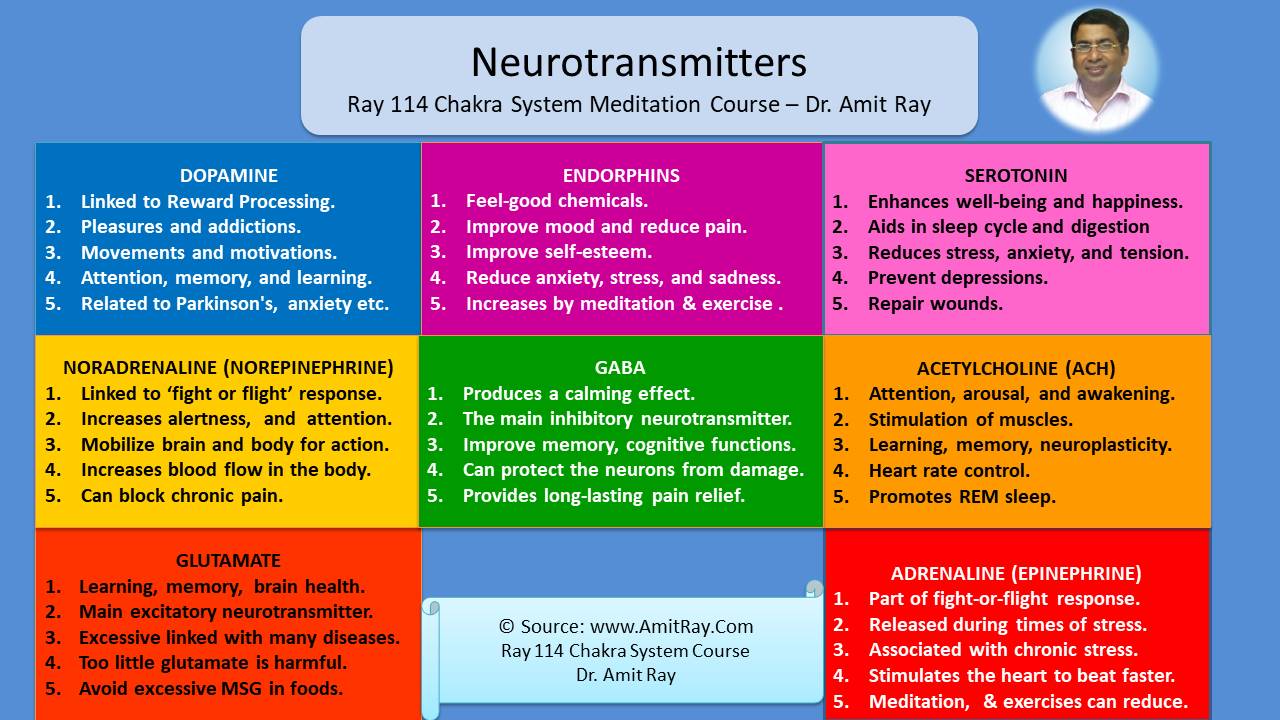
    List of Important Neurotransmitters and their Functions

    Neurotransmitters are chemical messengers inside the body. They are essential for human growth and a variety of physical and mental processes [1]. 

    There are several types of neurotransmitters that act on different aspects of mental and bodily functions. Let us have a look at the important neurotransmitters and their functions.

    So far scientists have identified over 100 neurotransmitters. However, the ten of them are most vital. In this article, we'll take a closer look at the main neurotransmitters in your body. These are dopamine, glutamate, GABA, endorphins, serotonin, adrenaline, acetylcholine (ACH), norepinephrine, melatonin, and oxytocin.

    We’ll also explain the impact these chemical messengers may have on your body, mind, and behavior. We will also explain how the 114 chakras in the body help to keep the neurotransmitters in balance in order to promote physical, mental, emotional, and total well-being.

    List of Neurotransmitters and their Functions

    List of Neurotransmitters and their Functions

    Read more ..


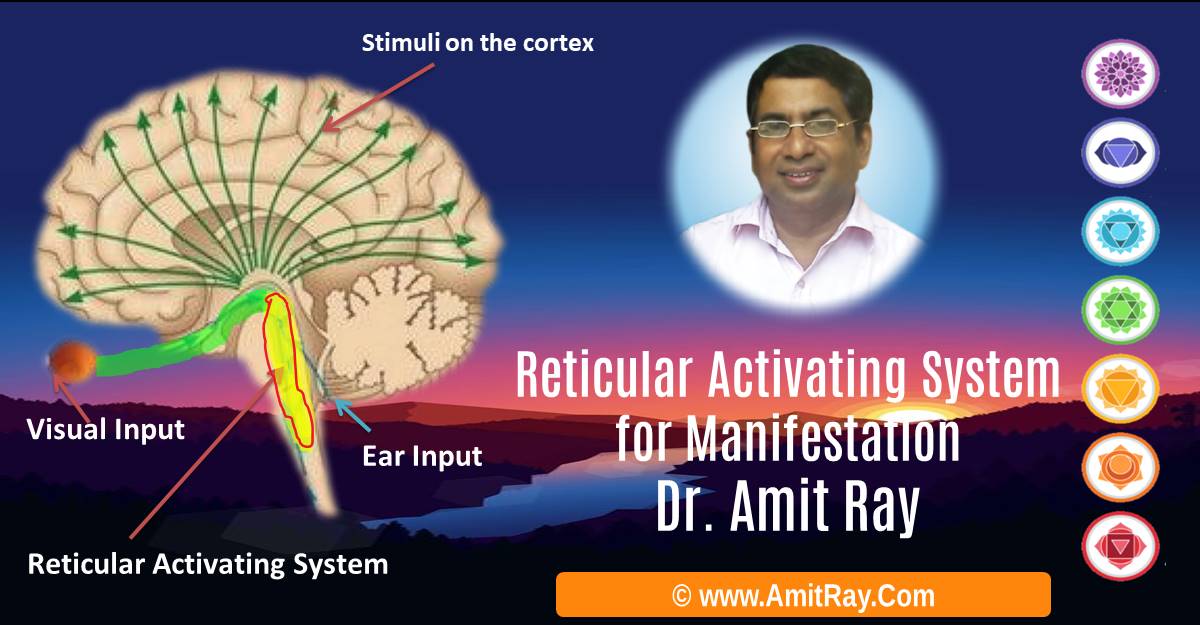
    Reticular Activating System for Manifestation and Visualization and 114 Chakras

    How to use the Reticular Activating System part of the brain to improve your manifestation power? Sri Amit Ray talks about the techniques to purify and reprogram your reticular activating system for effective visualization and manifestation.

    In this article, we explain how to reprogram your reticular activating system effectively to manifest your dreams. You will also know how it is related to some of the chakras, in the Sri Amit Ray 114 Chakra System framework. 

    Success in manifestation and Law of attraction needs clear vision, unshakable determination, and persistent smart work. Smart work means working efficiently with innovative ideas. However, smart work alone is not sufficient, you need to align with higher consciousness. You need to keep your focus consistently on your higher goals. To keep your focus consistently on your higher goals, you need purification of your reticular activating system. 

    Here, we discussed the 7 techniques to purify the reticular activating system for higher manifestations.

    Reticular Activating System for Manifestation Sri Amit Ray Teachings

    Reticular Activating System for Manifestation

    Your reticular activating system part of the brain can improve your manifestation and visualization power with mantra and exercises. Before deep-diving into the roles of RAS in manifestation of your dreams, let's first understand Reticular Activating System in brief.

    Read more ..

    Seven Scientific Benefits of Om Chanting

    Seven Scientific Benefits of Om Chanting

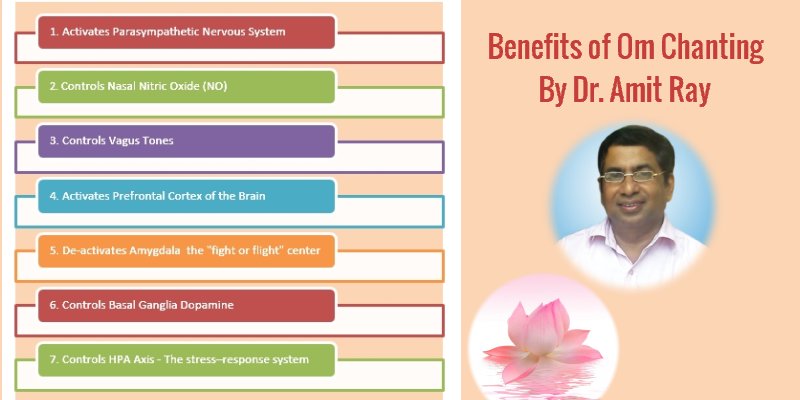
    Here, Sri Amit Ray explains the scientific aspects of om chanting benefits.

    Om chanting is a disciplined and  flexible process to remove tension, anxiety,  fear, depressions, and negativity from life.  It can bring positivity to your life like courage, focus, concentration, happiness, and joy, effortlessly. It can improve your state (short term) as well as trait (long term) health, happiness, joy and well-being. 

    Om chanting is a series of step-by-step process. It is a scientific art but it should be learnt properly to get its benefits. Systematic guided Om chanting can change your emotional reactions and responses to external stimuli and internal experiences in a positive way. It can enhance your efficiency, calmness, tranquility, and mental clarity.

    Dr. Ray explains how low frequency Om chanting can reduce our daily stress, strain, anxiety and tensions. Om chanting is effective for stress management.  Under various pressure conditions such as before examination, before public speaking, before important sports events and during critical challenges of life Om chanting can enhance confidence and eliminate stress and anxiety.  Om chanting improves the connections between the amygdala and prefrontal cortex, which is the key component for relaxation, stress control and better decision making. 

    Seven Benefits of Om Chanting

    Low frequency seven step deep Om chanting increases gamma wave in the brain. The gamma brain waves are known as “feeling of blessings”.  The seven step deep Om chanting and meditation is supposed to be practiced for 20 minutes, two times per day. Dopamine, Oxytocin, Serotonin and Endorphins are the four key hormones generated in the body during low frequency Om meditation and these four hormones have huge impact on regulating both state anxiety as well as trait anxiety.

    "As flowers increases the sweetness of the Honey by hearing the humming sounds of the bees, Om chanting increases the sweetness of life." -- Amit Ray

    Read more ..


    Impact of Om Chanting for Stress Reduction and Stress Control

    Impact of Om Chanting for Stress Management

    Here, Sri Amit Ray explains how Om Chanting can improve our state (short term) and trait (long term) stress management.  Om chanting changes our emotional reactions and responses to external stimuli and internal experiences in a positive way.

    Dr. Ray explains how low frequency Om chanting can reduce our daily stress, strain, anxiety and tensions.  Under various pressure conditions such as before examination, before public speaking, before important sports events and during critical challenges of life Om chanting can enhance confidence and eliminate stress and anxiety.  Om chanting improves the connections between the amygdala and prefrontal cortex is the key to stress control. 

    Seven Benefits of Om Chanting

    Low frequency seven step deep Om chanting increases gamma wave in the brain. The gamma brain waves are known as “feeling of blessings”.  The seven step deep Om chanting and meditation is supposed to be practiced for 20 minutes, two times per day. Dopamine, Oxytocin, Serotonin and Endorphins are the four key hormones generated in the body during low frequency Om meditation and these four hormones have huge impact on regulating both state anxiety as well as trait anxiety. Om chanting is not simple. It is a series of step-by-step process. Om chanting is a scientific art but it should be learnt properly to get its benefits. The seven main benefits of Om chanting are as follows:

    Read more ..


Contact us | About us | Privacy Policy and Terms of Use |

Copyright ©AmitRay.com, 2010-2024, All rights reserved. Not to be reproduced.